Optic Types
4-16x Against a 6-24x Scope
Quick answer
Stay with the Vortex Diamondback Tactical 4-16x44 unless you have a specific, real need for the Vortex Diamondback Tactical 6-24x50. Past about 20x, mirage usually limits resolution before the optic does, and a 50mm objective at 24x gives only a 2.08mm exit pupil, so more magnification is frequently the wrong upgrade.
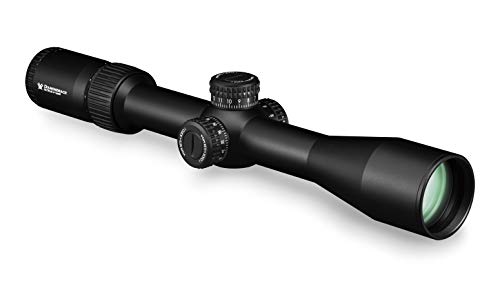
Vortex Diamondback Tactical 4-16x44 First Focal Plane Riflescope, EBR-2C MOA
$399.00 Full specificationsA 44mm objective scope that stays usable to 16x without the exit pupil or weight penalty a 50mm, 24x design carries.
Best for: a first precision rifle scope, or a hunting rifle that will be dialled
Check price on Amazon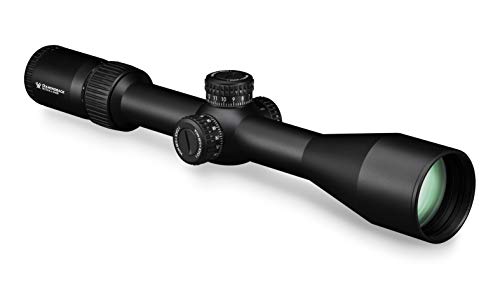
Vortex Diamondback Tactical 6-24x50 First Focal Plane Riflescope
$425.99 Full specificationsA 50mm objective scope with real reach to 24x, for a shooter who has confirmed mirage and light are not the limiting factor at their range.
Best for: known distance range work and steel at long range
Check price on AmazonBuying more magnification feels like buying more capability, and past a certain point on a hunting or field rifle it stops being true. A 6-24x50 can genuinely resolve more detail than a 4-16x44 in perfect, still air over a benchrest. In the actual field, heat mirage rising off the ground, the barrel, and the target itself blurs and shimmers the image well before 24x runs out of usable sharpness, which means the extra eight power at the top end of a 6-24x frequently buys nothing you can use.
This page argues against reflexively buying more magnification, using the same exact exit pupil math used across this site rather than a general impression. Built from published specifications, not our own hands-on testing.
Why does mirage limit resolution before 24x does?
Mirage is the visible shimmer caused by layers of air at different temperatures bending light unevenly as it travels from the target to your eye. It is worst over hot ground, over a heated barrel, and in bright midday sun, and it gets magnified along with everything else in the field of view. At 24x, a scope is magnifying both the target and the mirage distorting the air in front of it, and past roughly 20x on most days with any heat in the air, the shimmer becomes the dominant blur in the picture rather than the optic's own resolving power.
This is a real, widely reported observation among long range shooters and is the reason experienced precision shooters frequently dial down from their scope's maximum magnification rather than always shooting at full power, even on scopes capable of far more than 24x. The optic is rarely the limiting factor at that point. The air between the shooter and the target is.
Exit pupil across both scopes
The same sourced formula, exit pupil equals objective diameter divided by magnification, applied to both scopes at shared and maximum settings.
A 50mm objective at 24x gives only a 2.08mm exit pupil, dimmer than the 4-16x44 ever gets even at its own maximum of 16x.
Sourced figure
| Magnification | 4-16x44 exit pupil | 6-24x50 exit pupil |
|---|---|---|
| 6x (shared) | 7.33mm | 8.33mm |
| 16x (shared) | 2.75mm | 3.13mm |
| Each scope’s own top end | 2.75mm at 16x | 2.08mm at 24x |
Figures are exact arithmetic from the sourced formula using each scope’s published objective size and magnification.
When does the extra magnification on a 6-24x50 actually help?
Past 500 yards in genuinely still, cool air, at dawn before the ground heats up, or over water and snow where mirage builds more slowly, the extra reach on a 6-24x50 is real and useful, particularly for identifying impacts and reading wind through the scope itself rather than a separate spotting scope. A dedicated long range or precision rifle shooter who already shoots regularly past 500 yards and has confirmed their conditions support it is exactly who this scope is built for.
For a general hunting rifle or a shooter whose real shots land inside 400 yards, the 4-16x44 covers the actual working range with a brighter image at every shared magnification and less weight to carry. Buying the 6-24x50 for that shooter is buying a spec sheet number rather than a capability that gets used, and the honest answer, over and over in owner-review consensus among long range shooters, is that the lower-power scope was the right call for how they actually shoot.
Sources
- Vortex published specifications
- Exit pupil formula: objective diameter divided by magnification, an exact optical relationship
- Owner-review consensus from long range and precision rifle shooting forums
Frequently asked questions
Does more magnification always mean I can shoot further accurately?
No. Past roughly 20x, mirage, air movement, and your own hold typically become the limiting factor before the optic's resolving power does, especially in warm conditions or over any distance with heat sources like ground or barrel between you and the target. More magnification only helps once those other limits are already under control.
What is the exit pupil of a 6-24x50 at full power?
2.08mm, from the sourced formula of 50 divided by 24. That is dimmer than a 4-16x44 ever gets even at its own maximum of 16x, which produces 2.75mm, meaning the scope with the bigger objective and higher top-end magnification is actually the dimmer one at its ceiling.
Why do experienced long range shooters dial down from full magnification?
Because mirage and other atmospheric distortion get magnified along with the target, and past a certain point that shimmer becomes the dominant blur in the field of view rather than anything the optic itself is doing. Dialing back to 16x or 18x on a 24x-capable scope frequently produces a sharper, more usable sighting picture than staying at full power.
Is a 4-16x44 enough scope for most hunting and target shooting?
Yes, for the large majority of shots inside 400 to 500 yards, which covers nearly all hunting and most club-level target shooting. It stays brighter than a 6-24x50 at every shared magnification and is lighter and easier to mount, without giving up any resolving power that would actually get used at those distances.
When is a 6-24x50 genuinely the better choice?
When you regularly shoot past 500 yards in conditions where mirage is manageable, such as cool mornings or over snow and water, and when you specifically use the higher magnification to read impacts or judge wind through the scope. Confirm that use case exists in your actual shooting before paying for the extra reach and weight.
Can I fix a dim picture at high magnification by buying a bigger objective?
Only partially, and often not at all if the magnification climbs along with the objective size, which is exactly the trap in this comparison. A 50mm objective at 24x is dimmer than a 44mm objective at 16x, so a bigger objective paired with proportionally more magnification does not guarantee a brighter image at the top of the range.
Researched, not professional advice. This page is compiled from published manufacturer specifications, published optical and ballistic formulas, and owner-review consensus, not hands-on testing. Figures described as a rule of thumb are shooter convention rather than sourced numbers, and they are labelled that way wherever they appear. Ballistic figures come from a point mass model using the ballistic coefficient the maker publishes, so treat them as a starting point and confirm them on paper at a measured distance. Confirm your firearm is unloaded with the action open before you mount, level, torque or bore sight anything. Verify a zero only on a supervised range or a safe, legal backstop, know what lies beyond your target, and follow the law where you hunt and shoot, including rules on land access and permitted cartridges.