Trajectory and zero
Bullet Drop and Come Up Calculator
Quick answer
Bullet drop is computed from muzzle velocity, ballistic coefficient, sight height and zero distance. A 168 grain .308 at 2,650 feet per second with a 100 yard zero falls about 14.7 inches at 300 yards and needs 4.68 MOA of come-up to centre there.
This is a G1 point mass solver. It integrates the real equations of motion using the published G1 standard drag function, which is the same reference the ballistic coefficient printed on your box was measured against. That makes it the right model to use with the number the box gives you.
What it is not: it is not Doppler radar data, it does not use a custom drag curve, and it does not model spin drift, Coriolis or aerodynamic jump. Inside 600 yards those omissions are smaller than the error in your muzzle velocity. Past that they start to matter, and the honest answer is to confirm on paper.
The single largest input error is muzzle velocity. Catalogue figures come from test barrels that are usually longer than yours, and being 100 feet per second optimistic puts you roughly a foot low at 600 yards.
Bullet drop and come up calculator
Path at 300 yards
| Distance | Path | Come up (MOA) | Come up (mil) | Velocity | Energy | Wind |
|---|
The model
G1 point mass integration, standard sea level atmosphere. Drift by the lag time method: drift = wind speed x (time of flight - range / muzzle velocity)
What turns this model into your real numbers
Top matches update when you change your numbers.

Garmin Xero C1 Pro Compact Ballistics Chronograph
$499.99The instrument that made chronographs ordinary. It sits beside you on the bench rather than downrange, so there is nothing to shoot through and nothing to set up in front of the muzzle.
Best for: anyone who dials come-ups and wants real numbers
Check price on Amazon
Caldwell Ballistic Precision Chronograph 2.0 with Bluetooth and Sun Screens
$129.99An optical chronograph at a third of the price of a radar unit. It has to sit downrange of the muzzle and it needs consistent light, which is the trade you are making.
Check before buying: An optical chronograph sits in front of the muzzle. Set it up with the action open and the rifle unloaded, and check your alignment before every string: people shoot these every year.
Best for: real velocity data on a tight budget
Check price on Amazon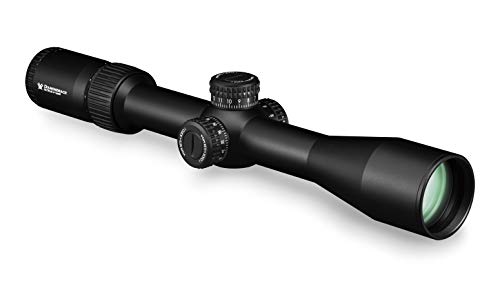
Vortex Diamondback Tactical 4-16x44 First Focal Plane Riflescope, EBR-2C MOA
$399.00 Full specificationsThe cheapest first focal plane scope worth owning, and the one that makes the case for the whole category: the reticle holds its subtension at every magnification, so a hold is a hold rather than a calculation.
Best for: a first precision rifle scope, or a hunting rifle that will be dialled
Check price on Amazon
Vortex Viper PST Gen II 5-25x50 First Focal Plane Riflescope, EBR-7C MOA
$999.00 Full specificationsThe reference precision scope in this price band. The turrets return to zero reliably, which sounds like a low bar and is the single thing cheap scopes fail at after a season.
Best for: a precision rifle that will be dialled hard and often
Check price on Amazon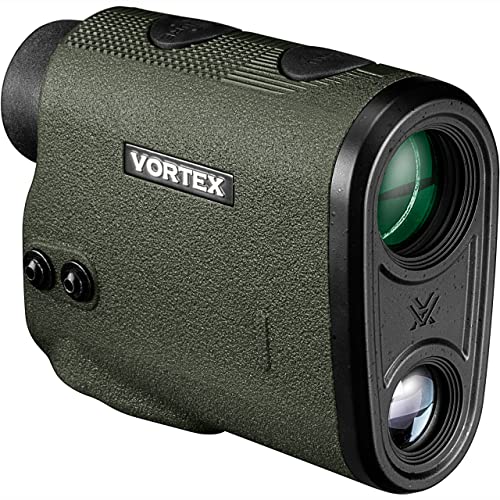
Vortex Diamondback HD 2000 Laser Rangefinder
$299.00Two thousand yards on a reflective target, and far more importantly a faster and more confident read on a soft target like an animal at four hundred.
Best for: reliable reads on soft targets rather than a headline number
Check price on Amazon
Vortex Riflescope Bubble Level, 1 inch
$39.00A permanent anti-cant level clamped to the tube, visible in your peripheral vision as you settle behind the rifle. It fixes the error at the moment it matters rather than at the bench.
Best for: checking cant on every shot rather than once at mounting
Check price on AmazonWhat each input actually does
Muzzle velocity and ballistic coefficient dominate past 400 yards, while sight height only matters inside about 100 yards.
Shooter convention
| Input | Where it matters most | How to get it right |
|---|---|---|
| Muzzle velocity | Everywhere past 300 yd, dominant past 600 | Chronograph your own load. A catalogue figure is a different barrel. |
| Ballistic coefficient | Past 400 yd, and in wind at any distance | Use the bullet maker published G1 figure for the exact bullet. |
| Sight height | Inside 100 yd, negligible past 200 | Measure it: half the barrel diameter, plus the gap, plus half the tube. |
| Zero distance | Shifts the whole curve up or down | Choose it deliberately, then confirm it on paper at that exact distance. |
| Air density | Past 600 yd, and strongly at altitude | Standard sea level is assumed here. Thin air flattens the far end noticeably. |
The ordering is what matters. Chasing a second decimal place on ballistic coefficient while using a catalogue muzzle velocity is effort spent in the wrong place.
Reading the table
Path is where the bullet is relative to your line of sight. Positive is above it, negative is below. This is what you hold.
Come up is what you dial to centre at that distance, in MOA and in mils. It is the negative of the path expressed as an angle, which is why a bullet 14.7 inches low at 300 yards needs 4.68 MOA up rather than 14.7 of anything.
Wind is a full value crosswind, meaning it is blowing at ninety degrees to the shot. Scale it in your head: half value for a wind at forty five degrees, and double for twice the speed. The drift figure uses the published lag time approximation, which is what every published drift figure is built on and which runs slightly optimistic past 600 yards.
Sources
- G1 standard drag function, the published Ingalls and Siacci reference
- Published factory load specifications for the preset cartridges
Frequently asked questions
What is a ballistic coefficient?
A number describing how well a bullet holds its velocity against air resistance, expressed relative to a standard projectile. A G1 coefficient of 0.462 means the bullet decelerates like the standard G1 shape scaled by that factor. Higher is better. Use the figure the bullet maker publishes for your exact bullet rather than a generic value for the weight.
Why does my rifle not match this table?
Almost always muzzle velocity. Catalogue figures come from test barrels that are frequently longer than yours, and a 100 feet per second difference is completely ordinary. Ballistic coefficient, altitude and temperature account for most of the remainder. Chronograph your own load and the far end of the table tightens up considerably.
What is the difference between drop and path?
Drop is how far the bullet falls from the bore line under gravity, which is a number you almost never need. Path is where the bullet sits relative to your line of sight, which accounts for sight height and your zero, and is what you actually hold or dial. This calculator reports path, because that is the useful one.
How accurate is a G1 model at long range?
Good to a few percent inside about 600 yards with an accurate muzzle velocity, and progressively less reliable beyond that, particularly as the bullet approaches the speed of sound. A G7 coefficient models modern boat tail bullets better, and radar derived drag data models them best. Confirm on paper before trusting any model past 600.
Does temperature and altitude change the drop?
Yes, and noticeably past 500 yards. Thinner air means less drag, so the bullet shoots flatter and drifts less. This calculator assumes standard sea level conditions. A hot day at 6,000 feet can flatten the far end of the table by a meaningful fraction of a mil, which is why hunters who travel confirm at their destination.
Why is the wind figure only an approximation?
It uses the lag time method, which computes drift from how far behind a hypothetical undecelerated bullet yours has fallen. It is the basis of every published drift figure and it runs perhaps ten percent optimistic past 600 yards. Wind calls are also limited by the fact that you cannot know the wind along the whole flight path, which is a larger error than the model.
Researched, not professional advice. This page is compiled from published manufacturer specifications, published optical and ballistic formulas, and owner-review consensus, not hands-on testing. Figures described as a rule of thumb are shooter convention rather than sourced numbers, and they are labelled that way wherever they appear. Ballistic figures come from a point mass model using the ballistic coefficient the maker publishes, so treat them as a starting point and confirm them on paper at a measured distance. Confirm your firearm is unloaded with the action open before you mount, level, torque or bore sight anything. Verify a zero only on a supervised range or a safe, legal backstop, know what lies beyond your target, and follow the law where you hunt and shoot, including rules on land access and permitted cartridges.