Mounting a scope
Expert Scope Setup: Precision Glass on a Squared Foundation
Quick answer
A precision setup built on a machined foundation costs about $2,161 including a 34 mm first focal plane scope, a one piece base, matched and lapped rings, a reticle levelling system and a lapping kit. Most of the step up from the intermediate build is in the mount and the turrets, not the magnification.
At this tier the question stops being what the scope can do and becomes whether the whole assembly returns to the same place every time, in the cold, after a day in a truck, after a hundred rounds.
That is a mechanical question, so this build spends disproportionately on the parts nobody photographs: a one piece base machined square, rings lapped to fit the tube without stress, and a levelling system that references the scope own machined surfaces rather than your eye.
Who should not buy this: anybody who has not yet run out of capability with the intermediate setup. If your groups are larger than your scope adjustment increment, or you have never run out of elevation, this build solves problems you do not have.
The complete setup: $2,161
$2,161A rifle with a receiver that can take a one piece Picatinny base, and a realistic need for elevation past 600 yards. If you cannot yet shoot the intermediate setup to its limits, buy that instead.
The optic
A 34 mm tube for internal travel, a first focal plane reticle, and turrets with a zero stop you can find in the dark.
| Item | Qty | Each | Line |
|---|---|---|---|
 Vortex Viper PST Gen II 5-25x50 First Focal Plane Riflescope, EBR-7C MOA The reference precision scope in this band, chosen for turret repeatability rather than for glass alone Vortex Viper PST Gen II 5-25x50 First Focal Plane Riflescope, EBR-7C MOA The reference precision scope in this band, chosen for turret repeatability rather than for glass alone | 1 | $999.00 | $999.00 |
| The optic subtotal | $999.00 | ||
A foundation machined square
One piece rather than two, so there is no chance of two halves being fitted a fraction out of line with each other.


Fitting it exactly
Alignment bars show you whether the rings point at the same place before the scope goes near them. Lapping removes the high spots.


Data
A radar chronograph derives a drag figure for your actual bullet rather than assuming the published one.
| Item | Qty | Each | Line |
|---|---|---|---|
 Caldwell VelociRadar Chronograph with Chirp Radar and Integrated Ballistic Calculator Tracks the bullet downrange rather than measuring it once at the muzzle, so the drag curve is yours Caldwell VelociRadar Chronograph with Chirp Radar and Integrated Ballistic Calculator Tracks the bullet downrange rather than measuring it once at the muzzle, so the drag curve is yours | 1 | $640.26 | $640.26 |
| Data subtotal | $640.26 | ||
Position
At this tier the shooter is frequently the largest remaining error, and bags are the cheapest way to remove some of it.
| Item | Qty | Each | Line |
|---|---|---|---|
 Protektor Model Owl Ear Front Bag, Medium Leather, holds its shape where a synthetic bag slumps, and the benchrest standard for decades Protektor Model Owl Ear Front Bag, Medium Leather, holds its shape where a synthetic bag slumps, and the benchrest standard for decades | 1 | $31.81 | $31.81 |
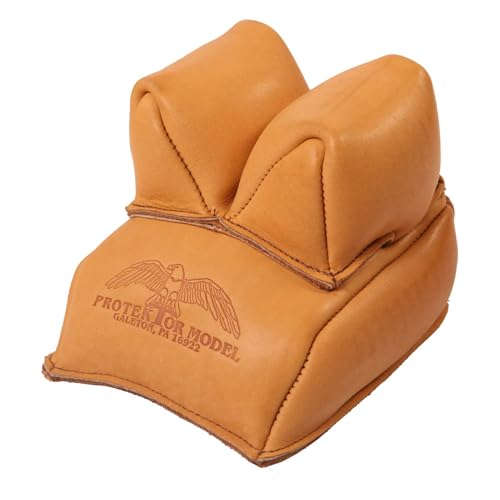 Protektor Model Rabbit Ear Rear Bag Ears grip the stock so the rifle returns to the same place between shots Protektor Model Rabbit Ear Rear Bag Ears grip the stock so the rifle returns to the same place between shots | 1 | $50.23 | $50.23 |
| Position subtotal | $82.04 | ||
Care
A scope at this price justifies the caps and the cleaning kit that will not scratch a coating.


Total for this setup
Optics and mounting hardware only, at the listed prices when this page was compiled. It does not include the rifle, ammunition, range fees, shipping or sales tax.
Why lapping rings is not fussiness
Two rings are machined separately, bolted to a base machined separately, on a receiver machined separately. Stack the tolerances and the two ring bores almost never point at exactly the same place.
A scope tube forced into misaligned rings is bent. Not visibly, but enough to preload the erector assembly, which is a floating mechanism held by springs. A preloaded erector tracks differently on the way up than on the way down, which is exactly the symptom people describe as a scope that will not return to zero.
Alignment bars show you the error before the scope is involved. Lapping removes it. The whole job takes twenty minutes and it is the difference between a mount that works and one that is a suspect for the next two years.
What actually separates this tier from the one below
Honest accounting of where the extra money goes, because the specification sheets make it look like magnification and it is not.
Most of the step up is turret repeatability and mount precision rather than glass or magnification, which is why the difference is hard to see in a shop and obvious after a season.
Shooter convention
| What changes | How much it matters | Why |
|---|---|---|
| Turret repeatability | Most of the difference | Returns to zero after hundreds of revolutions, in the cold, reliably |
| Mount precision | Large | A lapped matched pair removes erector preload, the commonest cause of a wandering zero |
| Internal elevation travel | Large past 800 yards | A 34 mm tube leaves room the smaller tubes do not have |
| Glass quality | Moderate | Visible at last light and at the top of the magnification range, not in daylight |
| Maximum magnification | Small | Mirage usually limits resolution before the optic does |
This is the honest ordering and it is close to the reverse of how these products are marketed.
What you can skip
Two things that sound like the top tier and mostly are not.
- Titanium rings, unless weight is the actual constraint. They are lighter and they are not stiffer in a way that changes anything. On a rifle carried up a mountain the saving is real. On a bench gun it is decoration.
- Thirty times magnification. Past about 20x on most days, mirage limits what you can resolve long before the optic does. Turning the magnification down to read through the mirage is a skill, and it is free.
What to upgrade first
Your own position, and it is free. At this point in the ladder the rifle, the scope and the mount are all better than most shooters. Dry practice, a repeatable cheek weld and consistent recoil management will do more for your groups than any further purchase on this page.
If you want to spend money anyway, spend it on a radar chronograph session and build a real drop table from your own drag data rather than a published ballistic coefficient. That is the last correctable error in the system.
Frequently asked questions
Is a 34 mm tube worth it?
Only for the internal elevation travel. A larger tube does not gather more light and does not make clicks finer, which are the two things people assume. What it gives you is room for the erector to move further, which matters once your come-up at maximum distance approaches half your scope published travel.
Do I need to lap scope rings?
On an expensive scope, yes. Rings, base and receiver are each machined to their own tolerance, and stacked together the two ring bores rarely point at the same place. A tube forced into misaligned rings preloads the erector, which produces a scope that tracks differently up and down and looks like a defect.
How do I know if my turrets are repeating?
Shoot a box test. Fire a group at zero, dial a known amount up, fire, dial the same amount right, fire, and continue back around to zero. The groups should land at the corners of a square whose sides match what you dialled, and the last group should land on the first. Anything else is a tracking problem.
Is expensive glass actually visible?
In daylight at moderate magnification, barely. At the top of the magnification range and in the last twenty minutes of light, clearly. Coatings and the number of air-to-glass surfaces determine light transmission, and the gap between a well coated optic and a poorly coated one is large enough to decide whether you take a shot.
What is a zero stop and do I need one?
A mechanical stop that prevents the elevation turret from turning below your zero, so you can always return to zero by feel without counting or looking. Once you regularly dial come-ups it stops being a luxury: it removes the possibility of being one full revolution off, which is a miss nobody diagnoses at the time.
Should I buy this or upgrade my rifle?
If your groups are larger than roughly half a minute of angle, the rifle or the load is the limit and a better scope will not shrink them. If your groups are tight but your zero wanders, or you have run out of elevation, the scope and mount are the limit. Diagnose before spending either way.
Researched, not professional advice. This page is compiled from published manufacturer specifications, published optical and ballistic formulas, and owner-review consensus, not hands-on testing. Figures described as a rule of thumb are shooter convention rather than sourced numbers, and they are labelled that way wherever they appear. Ballistic figures come from a point mass model using the ballistic coefficient the maker publishes, so treat them as a starting point and confirm them on paper at a measured distance. Confirm your firearm is unloaded with the action open before you mount, level, torque or bore sight anything. Verify a zero only on a supervised range or a safe, legal backstop, know what lies beyond your target, and follow the law where you hunt and shoot, including rules on land access and permitted cartridges.