Mounting a scope
Beginner Scope Setup: Mounted, Levelled and Zeroed
Quick answer
A complete first scope setup costs about $335 including the scope, two piece bases, rings, a levelling tool, a fixed torque limiter, a bore light and sight-in targets. That buys a rifle you can actually zero properly rather than a scope sitting in a box.
Almost everybody buying their first scope spends the entire budget on the scope and then discovers that mounting it needs four more things. This list is the honest version: the glass, the hardware that holds it, and the three tools that decide whether it holds zero.
The single most useful idea here is that the mount deserves real money. A good scope in a bad mount shoots worse than a modest scope in a good one, because a scope that creeps under recoil is indistinguishable from a scope that cannot hold zero, and it is far more common.
One honest limitation up front: this is a hunting setup for shooting inside about 300 yards. If you already know you want to dial come-ups past that, skip to the intermediate build rather than buying this and replacing it.
The complete setup: $335
$335A rifle already drilled and tapped for the base pattern you buy, which almost every modern bolt action is. Check what pattern your receiver takes before ordering bases. See the <a href="/guides/how-to-mount-a-riflescope">scope mounting guide</a> for the whole sequence.
The optic
One scope, chosen for warranty and for a magnification range that covers real shooting rather than for the biggest number on the box.
| Item | Qty | Each | Line |
|---|---|---|---|
 Vortex Crossfire II 3-9x40 Riflescope, Dead-Hold BDC Reticle Lifetime transferable warranty, and 3-9x is the range almost all hunting happens in Vortex Crossfire II 3-9x40 Riflescope, Dead-Hold BDC Reticle Lifetime transferable warranty, and 3-9x is the range almost all hunting happens in | 1 | $128.99 | $128.99 |
| The optic subtotal | $128.99 | ||
The mount
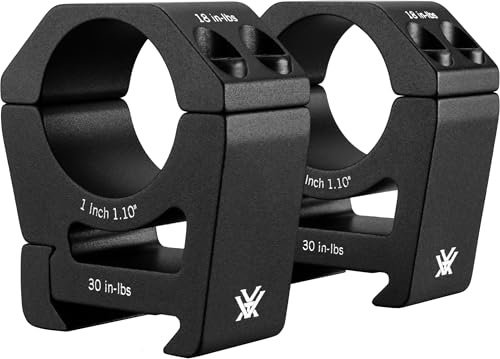
Bases and rings. Buy the rings last, after the scope is in your hands, so you can check the objective actually clears the barrel.

The three tools that decide whether it holds zero
Not a workshop. These three solve the three problems a first mounting job actually has: cant, torque and getting on paper.
| Item | Qty | Each | Line |
|---|---|---|---|
 Wheeler Engineering Level-Level-Level Mounting Tool with Magnetic Base Squares the reticle to the rifle rather than to the bench, which is the distinction that matters Wheeler Engineering Level-Level-Level Mounting Tool with Magnetic Base Squares the reticle to the rifle rather than to the bench, which is the distinction that matters | 1 | $19.99 | $19.99 |
 Fix It Sticks Small Torque Limiter A fixed torque limiter, so ring screws land on the published figure with no dial to set wrong Fix It Sticks Small Torque Limiter A fixed torque limiter, so ring screws land on the published figure with no dial to set wrong | 1 | $46.50 | $46.50 |
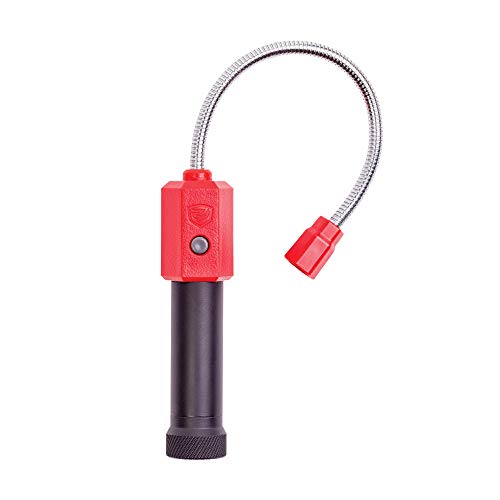 Real Avid Magnetic Bore Light with Flexible Neck Lights the bore so you can bore sight the honest way, with no alignment error of its own Real Avid Magnetic Bore Light with Flexible Neck Lights the bore so you can bore sight the honest way, with no alignment error of its own | 1 | $11.99 | $11.99 |
| The three tools that decide whether it holds zero subtotal | $78.48 | ||
Getting it zeroed
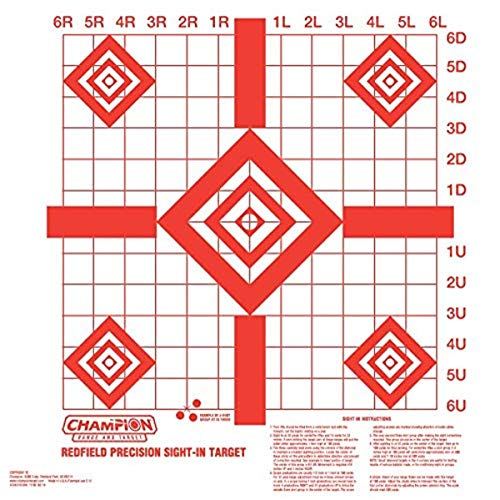
Zeroing tests the scope, not your position. Anything that removes you from the group makes the correction you dial a real correction.

Keeping it working
Two small purchases that prevent the two things that actually ruin a scope: a scratched objective and rain on the ocular.
| Item | Qty | Each | Line |
|---|---|---|---|
 Butler Creek Size 34 Objective Flip Open Scope Cover, 2.1 inch Flip cap for a 40 to 44 mm bell, measured by outside diameter rather than guessed Butler Creek Size 34 Objective Flip Open Scope Cover, 2.1 inch Flip cap for a 40 to 44 mm bell, measured by outside diameter rather than guessed | 1 | $11.61 | $11.61 |
 LensPen NLP-1 Lens Cleaning Pen Brush first, then the carbon tip, with no liquid that can run into the housing LensPen NLP-1 Lens Cleaning Pen Brush first, then the carbon tip, with no liquid that can run into the housing | 1 | $12.95 | $12.95 |
| Keeping it working subtotal | $24.56 | ||
Total for this setup
Optics and mounting hardware only, at the listed prices when this page was compiled. It does not include the rifle, ammunition, range fees, shipping or sales tax.
Why the mount gets a third of the budget
A scope does one job: point the reticle at the same place every time. Everything that stops it doing that job is mechanical, and almost all of it lives between the receiver and the scope tube.
Ring screws that are under-torqued let the scope creep forward under recoil a few thousandths at a time, which shows up as a zero that wanders over a season and is almost always blamed on the scope. Ring screws that are over-torqued pinch the tube, which stresses the erector assembly and can genuinely damage it. Both failures are invisible and both are prevented by a $46 torque limiter.
The other half is cant. If the reticle is not square to the rifle, dialling elevation also moves the impact sideways, in proportion to how much you dial. At 100 yards nobody notices. At 500 yards with 12 MOA on the dial, two degrees of cant is roughly four inches of unexplained windage.
What this setup will and will not do
An honest summary of the capability you are buying, so you can decide whether to skip straight to the intermediate build.
This setup is built for shooting inside about 300 yards with a centre hold or a simple holdover, and it is not built for dialling come-ups at distance.
Shooter convention
| Task | This setup | Why |
|---|---|---|
| Zeroing at 100 yards | Yes, properly | The bags and the gridded targets make the correction readable |
| Hunting inside 300 yards | Yes | 3-9x and a simple reticle is what almost all hunting actually needs |
| Dialling come-ups past 400 yards | Not well | Capped turrets and a second focal plane reticle are the wrong tools for it |
| Precision rimfire at varying distance | No | Fixed parallax at 100 yards introduces error at rimfire distances |
| Low light past legal shooting light | Partly | A 40 mm objective at 9x gives a 4.4 mm exit pupil, which is adequate rather than generous |
The honest version of a first setup is one that does the ordinary job completely rather than the exceptional job badly.
What you can skip
Three things people buy at this stage and should not.
- A laser bore sighter kit. The $25 kits with 32 caliber adapters are a false economy: if the adapter is not perfectly square in the bore, the laser points somewhere the barrel does not, and you spend more ammunition chasing it than you saved. A bore light and your own eye is more accurate and costs less.
- An adjustable torque wrench. A fixed limiter at the figure your ring maker publishes does the same job with nothing to set wrong. Buy the adjustable one when you own several rifles.
- A bigger objective. A 50 mm objective needs taller rings, which lifts your cheek off the stock, which costs you more accuracy than the extra light buys. Check what a 50 mm objective actually gives you before paying for one.
What to upgrade first
The rings, before the scope. If anything on this list is going to be replaced first it should be the mount, not the glass. Moving from stamped rings to a matched and lapped pair removes ring stress on the tube, which is the most common cause of a scope that will not hold a zero and looks like a scope defect.
After that, an anti-cant level. It costs very little, it fits any tube, and a reticle canted two degrees is invisible at 100 yards and throws the shot several inches sideways once you start dialling.
Frequently asked questions
How much should I spend on a first scope setup?
About $335 covers the scope and everything needed to mount and zero it properly. The common mistake is spending the whole budget on glass and then mounting it with whatever rings came in a bargain bin, which produces a rifle that will not hold zero and a shooter who blames the scope.
Do I really need a torque wrench for scope rings?
Yes, and it is the cheapest insurance on this list. Ring screws have a published torque figure, usually between 15 and 25 inch pounds, which is far less than it feels like. Under-tightening lets the scope creep under recoil and over-tightening pinches the tube and can damage the erector. A fixed limiter removes the guess entirely.
Can I mount a scope without any special tools?
You can, and people do. What you give up is knowing whether the reticle is square and whether the screws are at the right tension, which are the two things that decide whether the scope holds zero. The levelling tool and the torque limiter together cost less than a box of ammunition and they remove both unknowns permanently.
Should I buy rings and bases, or a one piece mount?
On a bolt action with a conventional receiver, bases and rings. On a flat top receiver where the scope needs to sit forward for correct eye relief, a one piece cantilever mount, because it sets ring alignment at the factory and puts the scope where your head actually is. The receiver decides this, not preference.
What ring height do I need?
Whatever clears the objective bell with about an eighth of an inch to spare, and no more. For a 40 mm objective that is usually a high ring in most catalogues. Ring height names are marketing rather than measurements, so buy by the published number in inches. Check what your objective needs before ordering.
Is a cheap scope worth mounting properly?
More so than an expensive one, not less. An expensive scope will usually survive a mediocre mounting job. A budget scope has less margin everywhere, so removing cant and getting the torque right is where most of its available accuracy comes from. The tools also outlast the scope and transfer to the next one.
Researched, not professional advice. This page is compiled from published manufacturer specifications, published optical and ballistic formulas, and owner-review consensus, not hands-on testing. Figures described as a rule of thumb are shooter convention rather than sourced numbers, and they are labelled that way wherever they appear. Ballistic figures come from a point mass model using the ballistic coefficient the maker publishes, so treat them as a starting point and confirm them on paper at a measured distance. Confirm your firearm is unloaded with the action open before you mount, level, torque or bore sight anything. Verify a zero only on a supervised range or a safe, legal backstop, know what lies beyond your target, and follow the law where you hunt and shoot, including rules on land access and permitted cartridges.