Optic Types
LPVO Against a Fixed Power Scope
Quick answer
Buy a fixed power scope like the Burris Scout 2.75x20 if you already know your working distance, and the Primary Arms SLX 1-6x24 LPVO if it varies. Fixed power is lighter and simpler, with no erector to shift and usually a more forgiving eye box, while a variable buys flexibility you may not actually use.
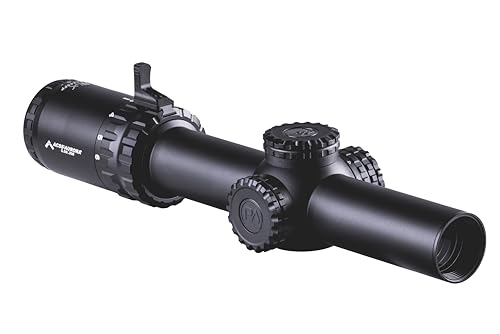
Primary Arms SLX 1-6x24 Second Focal Plane Gen IV LPVO Riflescope
$349.99 Full specificationsA 1x to 6x variable that covers close range and moderate distance in one optic, at the cost of a zoom erector and a shrinking eye box.
Best for: holding rather than dialling, on a 5.56 or .308 carbine
Check price on Amazon
Burris Scout 2.75x20 Riflescope with Heavy Plex Reticle
$299.99 Full specificationsA single, fixed magnification with no erector to shift and a simpler, lighter, more forgiving design overall.
Best for: a light scout rifle where handling matters more than magnification
Check price on AmazonA low power variable optic gets most of the marketing attention, and a fixed power scope quietly does the same job for a large share of shooters who never needed the zoom in the first place. The honest question is not which design is better. It is whether you actually use the magnification range a variable optic gives you, or whether you have settled on one working distance and are paying for flexibility that sits unused on the turret.
A fixed 4x or 6x scope is an underrated answer for exactly this reason, and it deserves to be considered seriously rather than dismissed as the option a beginner outgrows. This page is built from published manufacturer specifications and owner-review consensus, not our own hands-on testing.
What does "no erector to shift" actually mean?
A variable power scope changes magnification by physically moving an internal lens group, the erector, back and forth inside the main tube. That movement is precisely engineered, but it is still a moving mechanical assembly, and on some variable scopes the point of impact shifts by a small, measurable amount as the magnification ring turns, an effect commonly called zoom shift or erector shift. It is usually a minor effect on a well-built optic, but it is a real, documented failure mode that simply cannot exist on a fixed power scope, because there is no erector assembly moving at all.
A fixed power scope's internal lens positions never change after the scope is zeroed, so whatever accuracy and repeatability the scope has at the factory is the accuracy and repeatability you get for the life of the optic, with one less mechanical variable to ever go wrong.
Why is the eye box usually more forgiving on a fixed power scope?
Every telescope trades eye box for magnification, and a variable scope has to design its eye box around its entire zoom range, which means the eye box gets tighter as the ring turns toward the top end. A fixed power scope only ever has to be forgiving at the one magnification it offers, and manufacturers can optimize the whole optical design around that single point rather than compromising across a range. The practical result, reported consistently across owner reviews, is that a fixed power scope of a given magnification is usually noticeably more forgiving of head position than a variable scope set to that same magnification.
This matters most for a shooter who has already decided their working distance. A hunter who only ever shoots inside 150 yards in timber gains nothing from an LPVO's 6x top end and loses some of the ease a dedicated fixed 4x or 6x scope offers at exactly the distance that matters.
LPVO against fixed power, by the numbers
The core trade stated plainly, without favoring either design.
A fixed power scope has no erector to shift and is typically lighter and more forgiving at its one magnification, while an LPVO trades that simplicity for a real range of usable magnification in one optic.
Sourced figure
| Specification | LPVO | Fixed power scope |
|---|---|---|
| Erector movement | Moves with the zoom ring | None, fixed internally |
| Eye box | Widest at the low end, tightens up top | Consistent at its one magnification |
| Weight | Heavier, more moving parts | Lighter, simpler internals |
| Flexibility | Covers close and moderate range in one optic | One magnification, chosen once and fixed |
| Zero shift risk across the range | A real, documented effect on some models | Not applicable, nothing moves |
Zoom shift severity varies widely by model and is usually minor on a well-built LPVO; it is listed here because it is a real mechanical possibility that simply does not exist on a fixed power design.
Is a fixed power scope actually cheaper?
Generally yes, for a genuinely comparable level of glass quality, because a fixed power design needs fewer moving parts, a simpler erector assembly, and less engineering to hold zero across a zoom range that does not exist. That savings does not always show up as a lower price on the shelf, since some fixed power scopes are built to a premium standard for a specialized use case, but comparing similar quality tiers head to head, the fixed design is consistently the simpler and cheaper optic to manufacture.
The honest counterpoint is that a fixed power scope locks in a decision at the time of purchase that a variable optic lets you defer. A shooter who is not yet certain of their working distance is often better served paying more for a variable scope now than buying a fixed power scope and discovering later that the one magnification chosen was the wrong one.
Sources
- Primary Arms published specifications
- Burris published specifications
- Owner-review consensus from hunting and rifle-build forums
Frequently asked questions
Is a fixed power scope good enough for hunting?
Yes, and for decades it was the standard rather than a compromise. A fixed 4x or 6x scope at a known working distance is lighter, has no erector to shift, and is usually more forgiving of an imperfect cheek weld than a variable scope set to that same magnification. It only falls short if your actual shooting distances vary more than the one magnification comfortably covers.
What is zoom shift and how much does it matter?
Zoom shift is a small, measurable movement of point of impact as a variable scope's magnification ring is turned, caused by the erector assembly physically moving inside the tube. It is usually minor on a well-built modern LPVO and not something most shooters notice in the field, but it is a real mechanical possibility that a fixed power scope, with no moving erector, simply cannot have.
Why would I choose a fixed power scope over a variable one?
Because you have already settled on a working distance and do not need the flexibility a variable scope offers. At that point a fixed power design gives you a lighter optic, a more forgiving eye box at your actual magnification, one less mechanical system to fail, and typically a lower price for comparable glass quality.
Does a fixed power scope have a bigger eye box than an LPVO?
At the fixed scope's one magnification, usually yes, because the optical design is optimized entirely around that single setting rather than compromising across a zoom range. An LPVO set to the same magnification as a comparable fixed power scope typically has a tighter eye box, since part of its design budget went toward making the rest of the zoom range usable too.
Can I zero a fixed power scope the same way as a variable one?
Yes, the zeroing process is identical. The only difference is that a fixed power scope's zero cannot drift with magnification, since there is no zoom ring to change position, while a variable scope's zero should be checked at whatever magnification you actually intend to shoot at, particularly if it is not the magnification you zeroed at.
Is an LPVO ever the wrong choice for a first riflescope?
It can be, if the extra weight, cost, and mounting complexity are not buying you anything, because your actual shooting stays inside a narrow range that a fixed power scope covers just as well. An LPVO earns its complexity when the shooting distance genuinely varies enough to need both ends of the zoom range in real use.
Researched, not professional advice. This page is compiled from published manufacturer specifications, published optical and ballistic formulas, and owner-review consensus, not hands-on testing. Figures described as a rule of thumb are shooter convention rather than sourced numbers, and they are labelled that way wherever they appear. Ballistic figures come from a point mass model using the ballistic coefficient the maker publishes, so treat them as a starting point and confirm them on paper at a measured distance. Confirm your firearm is unloaded with the action open before you mount, level, torque or bore sight anything. Verify a zero only on a supervised range or a safe, legal backstop, know what lies beyond your target, and follow the law where you hunt and shoot, including rules on land access and permitted cartridges.