Bore sighters
Best Laser Boresighters
Quick answer
The pick for most rifles is the Wheeler Professional Laser Bore Sighter with Magnetic Connection at $97.68, because its magnetic muzzle connection needs no caliber-specific arbor, avoiding the single biggest failure point in cheaper kits that insert a rod down the bore.
This category is worth being unusually blunt about. A search for laser boresighters returns page after page of unbranded kits bundled with dozens of caliber-specific arbor adapters, priced low enough to look like an obvious buy. This catalog deliberately carries only two products, and that is a decision, not an oversight: a bore sighter is a narrow, honest tool with one job, and most of what is sold in this category oversells that job badly.
A bore sighter is not a zero. It gets a rifle on paper at roughly 25 yards so that the first live rounds fired are small corrections rather than a blind search across the target. That is genuinely useful and genuinely worth owning one for. It is not a substitute for confirming a zero with actual fired rounds at a real distance, and no bore sighter on the market, at any price, changes that.
On this page
- Why a $25 kit of 32 caliber adapters is a false economy
- Two honest methods, and why the catalog stops at two
- What a bore light actually is, and why it is not a laser
- What happens after the boresighter gets you on paper
- Beginner: no laser, no arbor, no guesswork
- Intermediate: works on any rifle, no arbor needed
- Expert: the real ceiling is a rest, not a laser
Why a $25 kit of 32 caliber adapters is a false economy
The bundled arbor kits that dominate search results work by inserting a rod, sized to a specific caliber, down the muzzle so the laser sits on the bore's own axis. The entire method depends on that rod sitting perfectly square and centered in the bore, and a loose, worn, or slightly undersized adapter almost never does. When the rod tilts even a fraction of a degree off the bore's true axis, the laser points somewhere the barrel is not actually aimed, and the error grows with distance exactly the way any angular error does.
The false economy is not the sighter's price, it is the ammunition spent chasing a bad reading. A shooter trusting a poorly seated adapter dials in on the laser's dot, fires a confirming round, finds it well off target, and starts second-guessing the rifle, the scope, or their own mounting work, when the actual fault was a $2 plastic adapter that never sat square in the bore. Solving that by burning rounds at the range costs more than the adapter kit saved in the first place. If you already have a specific caliber not covered by a magnetic unit, an arbor-style kit exists, but it carries exactly this risk and deserves the same skepticism regardless of which brand sells it.
Two honest methods, and why the catalog stops at two
Both products in this catalog solve the arbor problem a different way, and neither pretends to replace a real zero.
A magnetic laser sighter such as the Wheeler Professional Laser Bore Sighter with Magnetic Connection works on any rifle without an arbor, while a bore light such as the Real Avid Magnetic Bore Light with Flexible Neck uses true optical alignment on rifles you can see straight through the bore of.
Shooter convention
| Method | How it avoids the arbor problem | Works on | Price |
|---|---|---|---|
| Wheeler Professional Laser Bore Sighter with Magnetic Connection | Clamps magnetically to the muzzle crown, no rod inserted in the bore | Any rifle with a magnetic muzzle | $97.68 |
| Real Avid Magnetic Bore Light with Flexible Neck | No laser or arbor at all, a light placed in the chamber for a direct look down the bore | Bolt actions and other rifles you can see straight through | $11.99 |
Neither method claims to produce a final zero. Both get a rifle on paper at a short distance so live rounds can confirm and refine from there.
What a bore light actually is, and why it is not a laser
The Real Avid Magnetic Bore Light with Flexible Neck is not a laser bore sighter at all. It is a small, magnetic LED light on a flexible neck, placed in the chamber of a rifle with the bolt removed so light travels down the bore itself. Looking through the bore from the muzzle end at a distant aiming point, then adjusting the scope's reticle to match, is the oldest bore sighting method there is, and it works because you are looking down the actual bore rather than trusting a laser's alignment to a separate rod.
The tradeoff is that this method only works on a rifle you can physically see through, which means a bolt action with the bolt out, or a similar action that opens a clear path from breech to muzzle. It does nothing for a lever action, a pump, or a semi-automatic where no such clear line exists, which is exactly where a magnetic laser sighter earns its higher price.
What happens after the boresighter gets you on paper
Getting on paper at 25 yards is the entire job. From there, the correct next step is a real sight-in session with a stable rest and enough rounds to confirm and adjust, not a more expensive bore sighter. A steady front rest such as the Caldwell The Rock Deluxe Adjustable Front Rest removes shooter movement from the equation, and a proper sight-in target such as the Champion Redfield Style Precision Sight-In Targets, 100 Pack makes the correction easy to read and repeat.
This is the honest ceiling of the whole category: no bore sighter, at any price, gets you closer to a confirmed zero than a stable rest and fired rounds on a real target do. Money spent chasing a fancier laser is better spent on the rest and the range time.
Beginner: no laser, no arbor, no guesswork
This tier optimizes for the cheapest method that carries none of the arbor-adapter risk at all, at the cost of only working on rifles with a clear line down the bore.
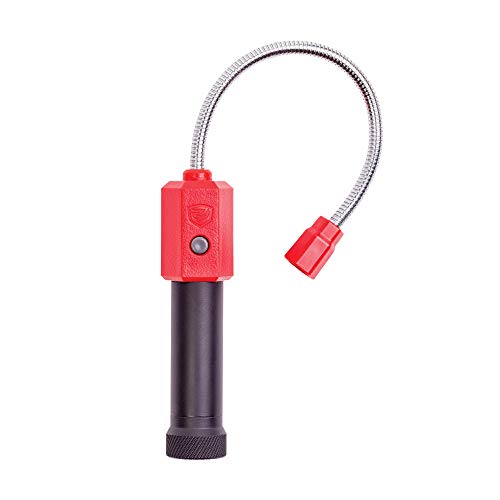
Real Avid Magnetic Bore Light with Flexible Neck
$11.99A direct look down the actual bore rather than trusting a laser and a rod, at the lowest price in this category, for anyone with a bolt action they can see straight through.
Best for: A bolt action rifle where the bolt comes out easily, giving a clear optical path to sight down directly.
Check price on AmazonIntermediate: works on any rifle, no arbor needed
This is the buy-once tier for anyone who owns more than one type of action, since a magnetic sighter does not care whether the bolt comes out or the bore is visible end to end.

Wheeler Professional Laser Bore Sighter with Magnetic Connection
$97.68A magnetic muzzle connection works across bolt actions, lever actions, and semi-automatics alike, without a caliber-specific arbor that has to sit perfectly square inside the bore.
Check before buying: A magnetic boresighter references the muzzle crown. If the crown is damaged or the magnet sits on a thread protector, the laser is not square to the bore and the result is worse than not using one.
Best for: A shooter with more than one type of action, or any rifle where looking straight down the bore is not possible.
Check price on AmazonExpert: the real ceiling is a rest, not a laser
The honest performance ceiling of bore sighting itself is fixed: it gets a rifle on paper at 25 yards, full stop. Past that point, the actual upgrade that matters is a stable rest and a proper sight-in session, not a more expensive sighter.

Caldwell The Rock Deluxe Adjustable Front Rest
$94.99A stable front rest removes shooter movement from the confirming shots that come after bore sighting, which is where a real zero actually gets refined.
Best for: Finishing what the boresighter starts, with a rest steady enough that the remaining correction is the rifle's, not the shooter's hold.
Check price on Amazon
Champion Redfield Style Precision Sight-In Targets, 100 Pack
$25.99A large stack of proper sight-in targets makes the correction from the boresighter's rough hit easy to read and repeat across several confirming groups.
Best for: A full sight-in session with enough targets to confirm the zero properly rather than stopping after a single group.
Check price on AmazonWho should not buy this tier: Not for anyone hoping a pricier bore sighter closes the gap to a true zero. That gap is closed by fired rounds on a stable rest, not by better electronics on the muzzle, which is why this tier recommends a rest and targets rather than a third bore sighter.
How we chose
We did not test these optics in person and we never claim to. Picks are researched from manufacturer specification sheets, published optical and ballistic formulas, and the recurring themes in verified owner reviews. Every pick is matched to a real objective diameter, a real tube size, a real ring height or a real exit pupil rather than to a price bracket, and it is placed in the tier where its capability actually belongs. Where a figure is shooter convention rather than a sourced number we label it, and where a manufacturer does not publish a figure we leave it out instead of estimating it.
Sources
- Wheeler Engineering published specifications
- Real Avid published specifications
- Standard published convention for a short-range confirming zero distance
Frequently asked questions
Does a bore sighter give me a true zero?
No. A bore sighter gets a rifle on paper at roughly 25 yards, close enough that the first live rounds are small corrections rather than a blind search for the group. Confirming and refining an actual zero still requires firing real rounds from a stable position at a measured distance, which no bore sighter replaces.
Why do cheap arbor-adapter bore sighter kits often mislead?
They work by inserting a caliber-specific rod down the muzzle, and the whole method depends on that rod sitting perfectly square and centered in the bore. A loose or worn adapter tilts slightly off axis, pointing the laser somewhere the barrel is not actually aimed, and that error grows with distance, often costing more in wasted ammunition chasing a bad reading than the kit itself saved.
What is the difference between a laser bore sighter and a bore light?
A laser bore sighter projects a dot onto a target from a fixed position relative to the bore, using either a magnetic muzzle clamp or an inserted arbor. A bore light has no laser at all: it is a light placed in the chamber so you can look directly down the actual bore from the muzzle end, which is the oldest and most direct method available.
Can I bore sight a lever action or a semi-automatic rifle?
A bore light generally cannot, since it depends on a clear line of sight from breech to muzzle that those actions rarely provide. A magnetic laser bore sighter works on nearly any action because it clamps to the outside of the muzzle rather than requiring a view down the bore itself.
How many rounds does bore sighting actually save me?
Enough to matter on an expensive cartridge. Sighting in from a completely unknown starting point can take a full box of ammunition walking shots onto the paper. A bore sighter that gets the first shot within a few inches of center at 25 yards typically cuts that down to a handful of confirming rounds.
Do I need a bore sighter if I have access to a good 25 yard range?
It is optional rather than required in that case, since a patient shooter with plenty of ammunition and a stable rest can walk a zero in from scratch. A bore sighter mainly saves time and rounds, which matters more for an expensive cartridge or a limited range session than for a rimfire with cheap ammunition and no time pressure.
Researched, not professional advice. This page is compiled from published manufacturer specifications, published optical and ballistic formulas, and owner-review consensus, not hands-on testing. Figures described as a rule of thumb are shooter convention rather than sourced numbers, and they are labelled that way wherever they appear. Ballistic figures come from a point mass model using the ballistic coefficient the maker publishes, so treat them as a starting point and confirm them on paper at a measured distance. Confirm your firearm is unloaded with the action open before you mount, level, torque or bore sight anything. Verify a zero only on a supervised range or a safe, legal backstop, know what lies beyond your target, and follow the law where you hunt and shoot, including rules on land access and permitted cartridges.