Technique
How to Build a Range Card
Quick answer
A working range card is built from your own chronographed velocity, not the catalog figure on the box, using a tool like the Garmin Xero C1 Pro Compact Ballistics Chronograph at $499.99. List come-ups in the single unit your turrets actually use, wind holds at a 10 mph full value baseline you can scale by ear, and only the distances you actually shoot.
A range card is the single highest value habit on this whole site, and it is also the one most shooters build wrong the first time, because it is tempting to fill it in from a manufacturer's ballistic chart and call it done. That chart was built with a test barrel that almost certainly does not match yours, at a muzzle velocity your specific rifle may miss by a hundred feet per second or more.
The card only earns its keep if the numbers on it are actually yours. That means your chronographed velocity from your own barrel, your own measured sight height, come-ups written in whichever single unit your turrets use so there is no unit confusion under time pressure, and a wind hold baseline you can scale in your head rather than a fixed number that only works at one wind speed.
How to build a range card
- Confirm the rifle is unloaded until you are on the firing line. Chronographing a load is live fire. Open the action and confirm the chamber is empty at the bench, and only load when you are on the line, ready, with a safe, legal backstop and a clear view of what lies beyond the target.
- Chronograph your actual load over multiple shots. Use a chronograph such as the Garmin Xero C1 Pro Compact Ballistics Chronograph at $499.99 or the Caldwell Ballistic Precision G2 Bluetooth Chronograph with LED Light Kit at $199.99 to record at least five to ten shots, fired from a stable rest such as the Caldwell DeadShot Filled Front and Rear Shooting Rest Bags, so your position is not adding variation on top of the ammunition's own.
- Average the readings, and note the spread. Use the average velocity, not a single reading, as your working number. A wide spread between shots is worth knowing on its own, since it predicts how much your drop and wind figures will vary shot to shot at distance.
- Run your averaged velocity through the drop calculator for each distance. Enter your chronographed velocity, the published ballistic coefficient, and your own measured sight height into a drop calculator for every distance you actually shoot. This replaces the catalog assumption with a number from your specific rifle.
- Record come-ups in the single unit your turret actually uses. Write down MOA or mil, whichever your turret is marked in, and only that one. A card with both units printed side by side invites dialing the wrong column under pressure, which is a worse outcome than a card with fewer distances on it.
- Record a wind hold at a 10 mph full value baseline for each distance. A full value crosswind at 10 miles per hour is the one number worth memorizing per distance, because it scales cleanly: double it for 20 mph, halve it for 5 mph, and apply the wind clock value for anything other than a direct crosswind.
- List only the distances you actually shoot. A card covering every 50 yards out to 1,000 is clutter if you never take a shot past 400. Keep the card to the specific distances your actual shooting calls for, which makes it faster to read under time pressure.
- Confirm every entry on paper before trusting the card. A calculated card is a starting point, not a finished product. Confirm the come-up at each listed distance with live fire on a supervised range or a safe, legal backstop, and adjust any entry that does not match what the rifle actually does.
- Record the load and the date, and rebuild after any change. Note the specific ammunition and the date the card was built. A change in bullet weight, powder lot, or barrel condition can shift the numbers enough to matter, and an outdated card is worse than no card because it looks trustworthy.
What actually belongs on a usable range card
A card that tries to hold everything becomes unreadable at the exact moment you need it fastest. Here is what earns a spot and where each number actually comes from.
A usable range card lists only the distances you actually shoot, come-ups calculated from your own chronographed velocity rather than a catalog figure, and a wind hold at a 10 mph full value baseline scaled by ear for other conditions.
Shooter convention
| Field | Where the number comes from | Why it has to be yours |
|---|---|---|
| Distance | The ranges you actually shoot | A card full of distances you never encounter is clutter, not a tool |
| Come-up (MOA or mil, pick one) | A drop calculator, fed with your chronographed velocity | Catalog velocity is a test-barrel figure that rarely matches your rifle |
| Wind hold at 10 mph full value | A wind drift calculator, then scaled by ear for other speeds and angles | One memorized baseline beats a dozen fixed numbers for conditions that never match exactly |
| Velocity at each distance | The same calculator run, same chronographed input | Confirms the load is still supersonic and flags where the far end of the card gets less reliable |
| Load and date | Written by hand when the card is finished | A drop table is only valid for the specific load and barrel condition that produced it |
Leave off anything that is not a distance you shoot, a number derived from your own measured inputs, or a note about the load itself. Everything else is decoration that slows down the read.
Chronographs that give you a real muzzle velocity
| Model | Price |
|---|---|
 Garmin Xero C1 Pro Compact Ballistics Chronograph Garmin Xero C1 Pro Compact Ballistics Chronograph | $499.99 |
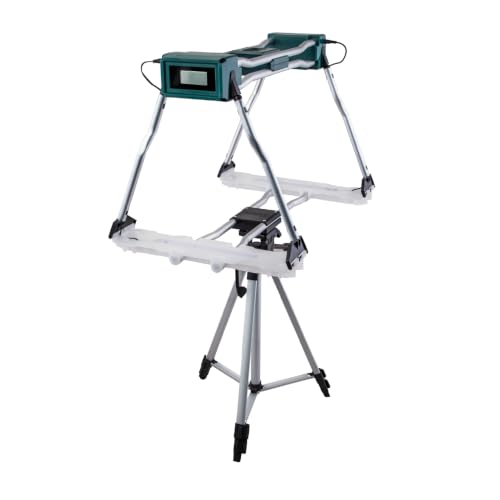 Caldwell Ballistic Precision G2 Bluetooth Chronograph with LED Light Kit Caldwell Ballistic Precision G2 Bluetooth Chronograph with LED Light Kit | $199.99 |
 Caldwell VelociRadar Chronograph with Chirp Radar and Integrated Ballistic Calculator Caldwell VelociRadar Chronograph with Chirp Radar and Integrated Ballistic Calculator | $640.26 |
A dash means the manufacturer does not publish that figure. We leave it blank rather than estimating it.
Why a catalog velocity is the wrong starting point
Published muzzle velocity figures come from a test barrel, typically longer than most factory or custom barrels and tuned for that specific published number. A difference of a hundred feet per second between the catalog figure and your own rifle is completely ordinary, not a sign anything is wrong with your barrel, and it is exactly the kind of gap that widens with distance rather than staying fixed.
At 100 yards that gap is invisible. At 500 yards or beyond, a hundred feet per second of muzzle velocity error can move your come-up by a meaningful fraction of a minute of angle, which on a range card built from the catalog number shows up as a card that simply stops matching the rifle past a certain distance. Chronographing your own load removes this error at the source rather than trying to correct for it later.
How we chose
We did not test these optics in person and we never claim to. Picks are researched from manufacturer specification sheets, published optical and ballistic formulas, and the recurring themes in verified owner reviews. Every pick is matched to a real objective diameter, a real tube size, a real ring height or a real exit pupil rather than to a price bracket, and it is placed in the tier where its capability actually belongs. Where a figure is shooter convention rather than a sourced number we label it, and where a manufacturer does not publish a figure we leave it out instead of estimating it.
Sources
- Owner-review consensus on range card construction and field use
- Standard exterior ballistics: chronographed velocity as the primary source of drop-table error
Frequently asked questions
Why can’t I just use the manufacturer’s published ballistic chart?
Because it was built from a test barrel with its own specific length and chamber, and a difference of a hundred feet per second between that figure and your own rifle is ordinary. That gap grows with distance, so a card built on the catalog number can look fine at 100 yards and be noticeably off by 500. Chronographing your own load removes that error entirely.
Should my range card use MOA or mil?
Whichever your turret is actually marked in, and only that one unit. Printing both units on the same card invites dialing the wrong column under time pressure, which causes a bigger miss than simply leaving one unit off. Match the card to the hardware, not to whichever unit feels more familiar to you personally.
Why use a 10 mph full value wind hold instead of listing every wind speed?
Because 10 mph full value is a number you can scale in your head instantly: double it for 20 mph, halve it for 5, and apply a clock value for anything other than a direct crosswind. A card listing a separate fixed hold for every possible speed and angle becomes too long to read quickly, which defeats the entire purpose of having a card.
How many shots do I need through a chronograph to trust the average?
Five to ten shots gives a reasonably stable average for most rifle and ammunition combinations, fired from a stable rest so your position is not adding variation on top of the load's own. Note the spread between shots as well as the average, since a wide spread predicts how much your drop and wind figures will vary at distance.
Do I need to rebuild my range card if I switch ammunition?
Yes, whenever the bullet weight, powder lot, or load changes meaningfully. A range card is only valid for the specific muzzle velocity and ballistic coefficient it was built from, and a different load can shift the numbers enough to matter at any distance past a couple hundred yards. Rechronograph and rebuild rather than assuming the old card is close enough.
What distances should actually be on my card?
Only the ones you realistically shoot. Padding a card with every 50 yards out to a thousand makes it slower to read at the exact moment speed matters most. Build it around your actual shooting, whether that is a tight hunting range or a known set of match distances, and add a new line only when a new real distance shows up.
Researched, not professional advice. This page is compiled from published manufacturer specifications, published optical and ballistic formulas, and owner-review consensus, not hands-on testing. Figures described as a rule of thumb are shooter convention rather than sourced numbers, and they are labelled that way wherever they appear. Ballistic figures come from a point mass model using the ballistic coefficient the maker publishes, so treat them as a starting point and confirm them on paper at a measured distance. Confirm your firearm is unloaded with the action open before you mount, level, torque or bore sight anything. Verify a zero only on a supervised range or a safe, legal backstop, know what lies beyond your target, and follow the law where you hunt and shoot, including rules on land access and permitted cartridges.