Gifts for new hunters
Gifts for New Hunters
Quick answer
A hunter with a brand new first rifle usually owns none of the supporting gear, so the strongest single gift is the Vortex Crossfire HD 10x42 Binoculars at $149.00, because a real 10x42 binocular does more for a first season than any mounting tool, though the tools below matter just as much overall.
Someone who just bought their first rifle almost never owns anything that supports it. There is no inherited set of mounting tools from a previous rifle, no sandbags in the truck, no printed targets in a drawer, and often no binocular at all beyond a phone camera zoomed in. This is the gift list built specifically for that gap, rather than for someone quietly filling a hole in a collection they already have.
The good news for a gift-giver is that almost everything a first-time hunter actually needs falls into the safe category. Mounting kits, torque drivers, bore lights, rest bags, and targets all work regardless of the specific rifle or scope already chosen, and a binocular is a standalone purchase that never has to match anything at all.
These recommendations are researched from published manufacturer specifications and owner-review consensus. Nobody on this site outfitted a brand new hunter from this list to time how long the gear lasted through a season, and any page implying that level of hands-on tracking for a gift guide should be read skeptically.
On this page
- What a first-season hunter is missing that nobody thinks to buy
- Why a binocular is often the most overlooked first purchase
- Why this is not the place to gift rings or a scope
- Beginner: the cheapest real head start
- Intermediate: the buy-once mounting kit
- Expert: the biggest single upgrade for a first season
What a first-season hunter is missing that nobody thinks to buy
Six categories cover almost everything a brand new rifle owner has not yet had a reason to buy, and every one of them is safe to gift without asking a single question.
A complete first-season kit across these six categories runs from $11.99 for a bore light alone to a full $65.99 mounting kit, well before anyone has to guess a ring height.
Sourced figure
| Category | Why a new hunter usually lacks it | Example | Price |
|---|---|---|---|
| Mounting kit | Has never mounted a scope before | Wheeler 1 inch Scope Mounting Kit with Manual F.A.T. Wrench and Alignment Bars | $65.99 |
| Torque driver | No way to hit the scope's published inch-pound specification | Fix It Sticks All-In-One Torque Driver, Accurate to 10 percent | $64.00 |
| Bore light | No way to see down the bore before sighting in | Real Avid Magnetic Bore Light with Flexible Neck | $11.99 |
| Rest bags | No sandbags or front rest owned yet | Caldwell DeadShot Filled Front and Rear Shooting Rest Bags | $37.99 |
| Sight-in targets | Nothing printed to actually confirm a zero on | Champion Redfield Style Precision Sight-In Targets, 100 Pack | $25.99 |
| Binoculars | Glassing with the naked eye or a phone camera | Vortex Crossfire HD 10x42 Binoculars | $149.00 |
None of these six categories require knowing the exact scope tube diameter or receiver pattern, which is what makes them safe to buy as a surprise for someone just starting out.
Why a binocular is often the most overlooked first purchase
New hunters spend heavily on the rifle and the scope, since those are the purchases the sport is named for, and quietly skip the binocular entirely, glassing with the naked eye or leaning on a phone camera at distance. A 10x42 binocular sits at the most broadly agreeable combination of magnification and low light performance sold, which is why it is the default recommendation across this entire site rather than a niche pick for one kind of hunting.
Twilight factor, a published measure of low light performance
Twilight factor = square root of (objective diameter in millimetres times magnification). A 10x42 binocular gives a twilight factor of about 20, a solid, broadly agreeable balance between magnification, weight, and low light performance.
This is a standard published optical formula, not a marketing figure specific to any single brand of binocular.
Why this is not the place to gift rings or a scope
A first-time hunter has almost certainly already chosen a scope, since it usually comes bundled with the rifle or gets picked at the same counter. Gifting a second scope or a set of rings without knowing the exact tube diameter and receiver pattern of what they already own risks a part that simply does not fit, on top of a purchase decision that was arguably not yours to make in the first place. The mounting tools, bags, and targets in this guide are the better fit precisely because they support whatever scope they already chose rather than competing with it.
Beginner: the cheapest real head start
This tier optimizes for the lowest cost path to two genuinely useful first-season items, leaving room for the recipient to build the rest of the kit themselves over time.
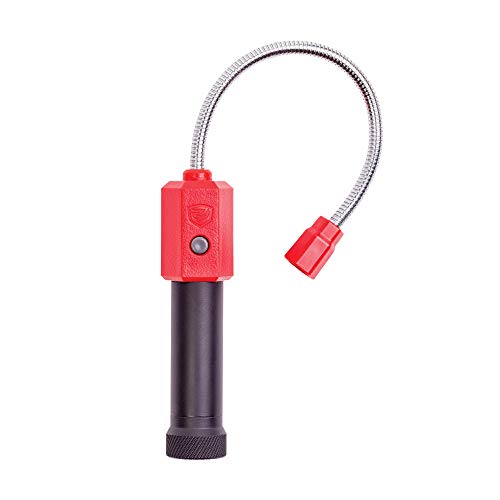
Real Avid Magnetic Bore Light with Flexible Neck
$11.99A magnetic bore light that lets a new owner actually see down the barrel before sighting in, at one of the lowest prices in this whole category.
Best for: Anyone who just picked up their first rifle and has never looked down a bore before mounting a scope.
Check price on Amazon
Champion Redfield Style Precision Sight-In Targets, 100 Pack
$25.99A hundred sheets of precision sight-in targets, enough for an entire first season of confirming and reconfirming a zero without running out of paper.
Best for: Pairing with any mounting or leveling gift so there is something printed to actually shoot at.
Check price on AmazonIntermediate: the buy-once mounting kit
This is the tier for someone about to mount their very first scope, covering the process end to end rather than leaving a piece of it for a separate purchase later.
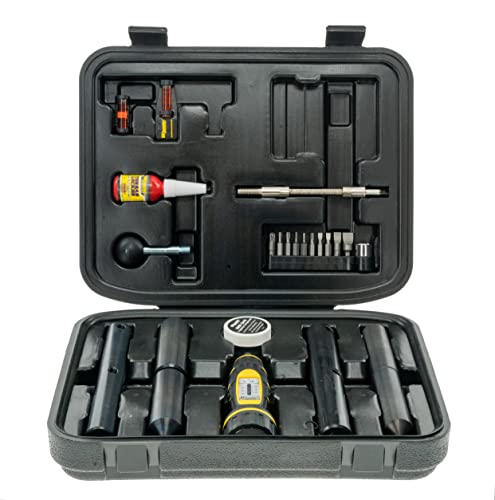
Wheeler Scope Mounting Combo Kit with FAT Wrench, Alignment and Lapping Bars
$129.99Alignment bars, a lapping kit, and a manual torque wrench together cover the entire mounting process a first-time scope owner has never done before.
Best for: A new hunter who bought a rifle and a scope separately and now has to mount it themselves for the first time.
Check price on Amazon
Caldwell DeadShot Filled Front and Rear Shooting Rest Bags
$37.99A matched front and rear bag set for a stable bench rest, at under half the mounting combo's price, for a gift focused on the sighting-in step instead.
Best for: A new hunter who already has a mounted scope and needs a steady rest to actually confirm the zero.
Check price on AmazonExpert: the biggest single upgrade for a first season
This tier is the performance ceiling for a gift that changes how much a new hunter actually sees in the field, rather than just how well their rifle is mounted.

Vortex Diamondback HD 10x42 Binoculars
$240.00A step up in glass quality and low light performance over the entry-level Crossfire line, still in the broadly agreeable 10x42 configuration.
Best for: A new hunter whose budget stretched to a good rifle and scope but skipped a binocular entirely.
Check price on Amazon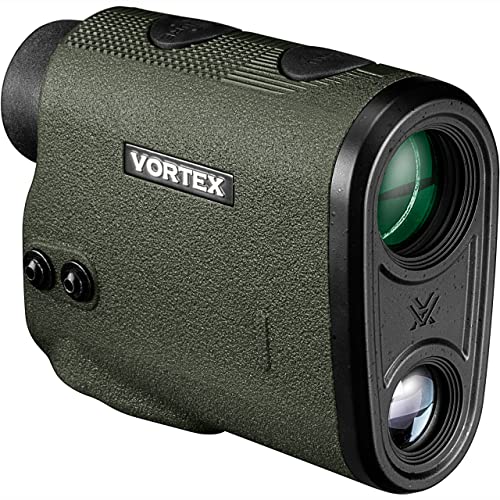
Vortex Diamondback HD 2000 Laser Rangefinder
$299.00A laser rangefinder that removes the guesswork of estimating distance by eye, useful the moment it comes out of the box with no fitment questions.
Best for: A new hunter who already owns a binocular and would benefit most from exact range data before a shot.
Check price on AmazonWho should not buy this tier: Not for a hunter who already owns a good binocular. Put this budget into mounting tools, a tripod, or a rangefinder instead, since a second binocular at this price is redundant rather than an upgrade.
How we chose
We did not test these optics in person and we never claim to. Picks are researched from manufacturer specification sheets, published optical and ballistic formulas, and the recurring themes in verified owner reviews. Every pick is matched to a real objective diameter, a real tube size, a real ring height or a real exit pupil rather than to a price bracket, and it is placed in the tier where its capability actually belongs. Where a figure is shooter convention rather than a sourced number we label it, and where a manufacturer does not publish a figure we leave it out instead of estimating it.
Sources
- Wheeler Engineering published specifications
- Vortex Optics published specifications
- Caldwell published specifications
- Real Avid published specifications
Frequently asked questions
What does a new hunter need besides a rifle and a scope?
Mounting tools, a bore light, rest bags, printed sight-in targets, and a binocular are the categories most new hunters do not yet own, since none of them come bundled with a first rifle purchase. All five are safe to gift without knowing the exact rifle or scope, since none of them need to match a specific measurement.
Is a mounting kit a good gift for someone with a brand new rifle?
Yes, provided the scope is not already mounted, or you are also gifting the mounting job itself. A combo kit with alignment bars, a lapping kit, and a torque wrench covers a first-time mount properly, catching the two most common beginner mistakes: misaligned rings and inconsistent torque.
Should I buy rings for a new hunter's first scope?
Only if you already know the exact tube diameter and receiver pattern of the rifle and scope, since both have to match precisely for rings to fit at all. A gift card toward mounting hardware, paired with a torque wrench they can use once they choose their own rings, is the safer version of the same idea.
What binocular should a new hunter start with?
A 10x42 configuration is the most broadly agreeable balance of magnification, weight, and low light performance available, with a twilight factor of about 20 by the standard published formula. It suits open country and timber both, which matters for someone who has not yet settled into one specific style of hunting.
Do new hunters actually need a bore light?
It solves a real, specific problem: seeing whether a bore is clean and clear before sighting in, which a new owner has often never had a reason to check before. It is inexpensive, needs no measurement of the rifle at all, and is genuinely used rather than being a novelty stocking item.
What is the cheapest way to help a new hunter get zeroed?
A stack of printed sight-in targets and a filled rear rest bag together cost a small fraction of a full mounting kit and directly support the one task a new hunter has to complete before the rifle is usable: confirming a real zero at a supervised range with a safe backstop.
Researched, not professional advice. This page is compiled from published manufacturer specifications, published optical and ballistic formulas, and owner-review consensus, not hands-on testing. Figures described as a rule of thumb are shooter convention rather than sourced numbers, and they are labelled that way wherever they appear. Ballistic figures come from a point mass model using the ballistic coefficient the maker publishes, so treat them as a starting point and confirm them on paper at a measured distance. Confirm your firearm is unloaded with the action open before you mount, level, torque or bore sight anything. Verify a zero only on a supervised range or a safe, legal backstop, know what lies beyond your target, and follow the law where you hunt and shoot, including rules on land access and permitted cartridges.