Mounting and fit
Sight Height Over Bore Calculator
Quick answer
Sight height equals half the barrel diameter, plus the gap under the tube, plus half the tube diameter. It decides where the bullet strikes up close: a rifle with a 2.6 inch sight height and a 100 yard zero can be two inches low at 25 yards purely because of the mount.
Sight height over bore is the vertical distance from the centre of the bore to the optical centre of the scope. The bullet leaves the muzzle that far below your line of sight and has to climb to meet it, which is why every rifle shoots low up close no matter how it is zeroed.
It is the one figure in this subject that is easiest to measure and hardest to look up, because it depends on the receiver, the base, the rings and the tube together and no manufacturer publishes the stack. Two minutes with a caliper beats every estimate on the internet, including this one.
The counterintuitive part: sight height matters enormously inside 100 yards and almost not at all past 200, which is the opposite of what most shooters assume.
Sight height over bore calculator
Sight height over bore
| Distance | Path | Hold |
|---|
The formula
sight height = (barrel outside diameter / 2) + gap + (tube outside diameter / 2)
Mounts and tools for getting this right
Top matches update when you change your numbers.
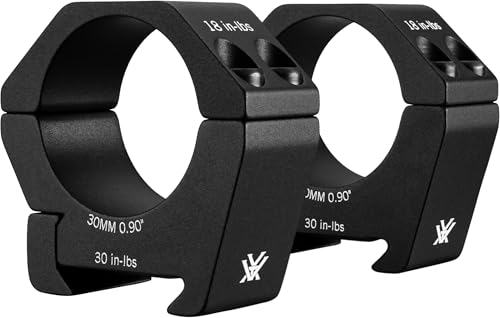
Vortex Sport Riflescope Rings, 30mm, Medium 0.90 inch
$39.00The height that fits the most common combination on this site: a 30 mm tube with a 44 mm objective.
Best for: a 30 mm tube with a 40 to 44 mm objective
Check price on Amazon
Vortex Sport Riflescope Rings, 30mm, High 1.1 inch
$39.00Clears a 50 mm objective on most bolt actions with a fraction to spare, which is the ring height most 50 mm scopes actually need.
Best for: a 50 mm objective on a bolt action
Check price on Amazon
Vortex Sport Cantilever Riflescope Mount, 30mm, 1.5 inch Height
$119.00 Full specificationsA 1.5 inch optical centre height, which is the figure most modern carbine shooters settle on because it lines the scope up with a head position that is not craned down.
Best for: a comfortable head position on a carbine
Check price on Amazon
Burris P.E.P.R. Scope Mount, 30mm, with Smooth and Picatinny Ring Tops
$61.19The mount that defined this category. It can be run forward for cantilever eye relief or reversed for a conventional position, and the Picatinny ring tops let you hang an offset sight off the scope itself.
Best for: a flat top receiver needing correct eye relief
Check price on Amazon
Vortex Riflescope Bubble Level, 1 inch
$39.00A permanent anti-cant level clamped to the tube, visible in your peripheral vision as you settle behind the rifle. It fixes the error at the moment it matters rather than at the bench.
Best for: checking cant on every shot rather than once at mounting
Check price on Amazon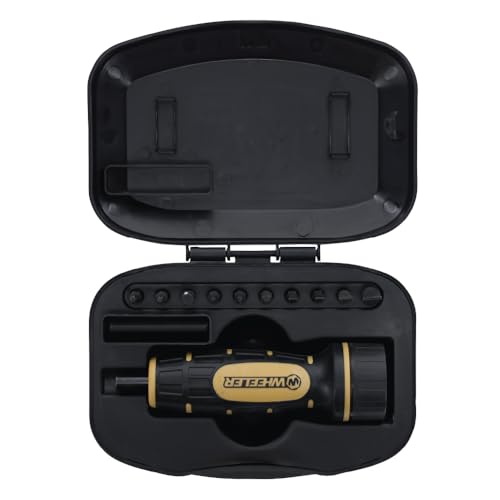
Wheeler Firearms Accurizing Torque Wrench with Bits and Case
$60.13The tool this whole category is named after. Dial the inch pound figure, tighten until it clicks, and the ring screw is at the number the ring maker published rather than at whatever felt right.
Best for: the standard torque wrench for scope mounting
Check price on AmazonHow to measure it in two minutes
- Clear the rifle. Open the action, confirm the chamber is empty, and leave it open. Nothing below is worth doing on a loaded firearm.
- Measure the barrel. Take the outside diameter of the barrel directly under the objective bell with a caliper. Half of that is the height of the bore centre above the barrel underside.
- Take half the tube from the known figure. A 1 inch tube is 0.500 inches to centre, a 30 mm tube 0.591, a 34 mm tube 0.669 and a 35 mm tube 0.689. No measuring needed.
- Measure the gap. The vertical gap between the top of the barrel and the bottom of the scope tube. A drill bit of known diameter slid into the gap works where a caliper will not reach.
- Add the three together. Half the barrel, plus the gap, plus half the tube. That is your sight height, accurate to a few hundredths.
Why it only matters up close
At the muzzle, the bullet is your full sight height below the line of sight. It climbs, crosses the line of sight once on the way up at the near zero, rides above it for a while, and crosses again on the way down at the far zero you set.
Near the muzzle, that entire vertical offset is sight height and nothing else, because gravity has barely acted yet. By 200 yards the trajectory is dominated by velocity and ballistic coefficient, and the difference between a 1.5 inch and a 2.6 inch mount has collapsed to a fraction of an inch.
Which means the practical consequence of a tall mount is a shot at 25 yards, not a shot at 500. On a flat top receiver with a 2.6 inch sight height and a 100 yard zero, holding centre at 25 yards puts the bullet roughly two inches low. In the field that is the difference between a clean shot and a wounded animal, and it has nothing to do with the rifle or the load.
Does a higher mount really extend point blank range?
Slightly, and the effect is real but small. A higher optical axis lets the bullet cross the line of sight later and spend marginally longer inside a vital zone before dropping out the bottom, which adds a handful of yards to maximum point blank range.
It is not a reason to mount a scope higher than your cheek weld wants. A mount that lifts your face off the stock costs you repeatable head position, which shows up as vertical stringing that looks exactly like a load problem. Take the few yards only if the height was free.
Sources
- G1 standard drag function, the published Ingalls and Siacci reference
- Published factory load specifications for the preset cartridges
Frequently asked questions
What is a typical sight height over bore?
Roughly 1.4 to 1.8 inches on a bolt action with conventional rings, and 2.4 to 2.8 inches on a flat top receiver where the rail already sits well above the bore. Those are ranges across ordinary rifles rather than specifications, which is why measuring your own is worth the two minutes it takes.
How do I measure sight height without a caliper?
Half the tube diameter is known exactly from the tube size, so you only need to estimate the other two. A ruler on the barrel gets you the barrel diameter within a few hundredths, and a drill bit of known diameter slid into the gap between barrel and tube gives you the gap accurately enough.
Does sight height matter at long range?
Barely. Past about 200 yards the trajectory is dominated by velocity and ballistic coefficient, and the difference between mount heights collapses to a fraction of an inch. Sight height is a close range consideration, which is the opposite of what most shooters assume when they worry about it.
Why is my AR pattern rifle shooting so low at 25 yards?
Because the optic sits around 2.6 inches above the bore and the bullet has not had distance to climb to your line of sight yet. With a 100 yard zero, holding centre at 25 yards puts the impact roughly two inches low. This is geometry rather than a zeroing fault, and the fix is to know the number.
What is a near zero?
The first distance at which the climbing bullet crosses your line of sight. Every zero has two: the near one on the way up and the far one on the way down. A rifle zeroed at 200 yards typically has a near zero somewhere around 25 to 50 yards, and holding centre between the two crossings puts the shot low.
Should I mount my scope as low as possible?
As low as the objective bell and your cheek weld both allow, in that order. Low keeps your head on the stock and your position repeatable. It is not worth forcing: a scope so low the bell touches the barrel, or so low you have to crush your face onto the comb, costs more accuracy than the height saves.
Researched, not professional advice. This page is compiled from published manufacturer specifications, published optical and ballistic formulas, and owner-review consensus, not hands-on testing. Figures described as a rule of thumb are shooter convention rather than sourced numbers, and they are labelled that way wherever they appear. Ballistic figures come from a point mass model using the ballistic coefficient the maker publishes, so treat them as a starting point and confirm them on paper at a measured distance. Confirm your firearm is unloaded with the action open before you mount, level, torque or bore sight anything. Verify a zero only on a supervised range or a safe, legal backstop, know what lies beyond your target, and follow the law where you hunt and shoot, including rules on land access and permitted cartridges.