Rangefinders and rangefinding binoculars
Rangefinder or Rangefinding Binoculars: Which Should You Buy?
Quick answer
A standalone rangefinder like the Vortex Viper HD 3000 at $399.00 is the better buy if you already own binoculars, since it weighs a few ounces and costs far less than a combined unit. Rangefinding binoculars such as the Vortex Fury HD 5000 at $979.00 only earn their price by replacing two devices with one.
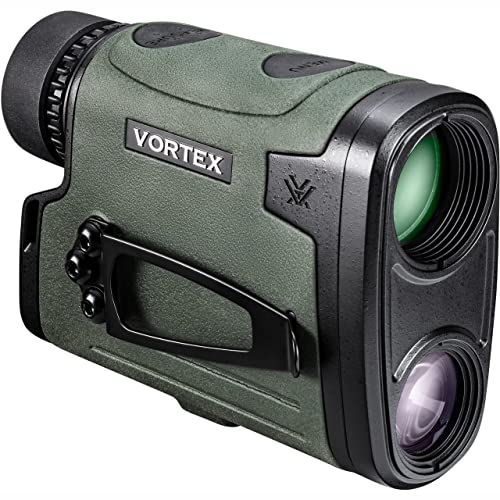
Vortex Viper HD 3000 Laser Rangefinder
$399.00A pocket-sized rangefinder built to do one job, at a lower weight and a lower price than any combined unit in this catalog.
Best for: ranging quickly on moving game
Check price on Amazon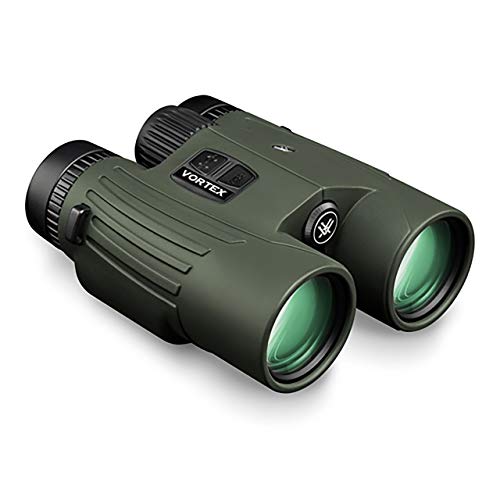
Vortex Fury HD 5000 10x42 Laser Rangefinding Binoculars
$979.00 Full specifications10x42 binoculars with a laser rangefinder built into the right barrel, so glassing and ranging happen through the same eyepiece without lowering it.
Best for: a hunter who currently carries binoculars and a rangefinder separately
Check price on AmazonA laser rangefinder and a pair of rangefinding binoculars measure distance the identical way: a laser pulse leaves the device, bounces off the target, and a timer converts the round trip into yards using the speed of light. That part of the technology does not differ between a $99 pocket unit and a $1,000 rangefinding binocular. What differs is everything built around that laser: the housing, the optics it shares space with, the weight on your neck, and the price.
Rangefinding binoculars solve a real problem, which is carrying and swapping between two separate devices in the field. They solve it by putting a laser rangefinder inside one barrel of a binocular, so the glass you are already looking through can also give you a distance without lowering it. That convenience is genuine and it is not free, in either dollars or ounces.
On this page
What is actually different between the two devices?
Inside either device the laser, the timer and the ranging math are the same published technology. The difference is entirely mechanical and economic. A standalone rangefinder is a single small housing built around one laser and one small monocular sight, so it is cheap to manufacture and light to carry. Rangefinding binoculars have to fit that same laser, its own optical path, and a battery into a housing that also holds two full binocular barrels and their prism systems, which is a harder and more expensive thing to build well.
That is why a rangefinding binocular of a given magnification and objective almost always costs more, and weighs more, than a standalone rangefinder and a comparable pair of ordinary binoculars would cost and weigh if you priced them separately. The question this page answers is whether the convenience of one device is worth that premium, not whether one measures distance more accurately than the other.
How much do you actually pay for the combination?
Pricing two real, similarly specified approaches from this catalog side by side shows exactly what the combined format costs, and what it buys back.
A separate rangefinder and a pair of 10x42 binoculars from this catalog cost about $539.00 together, roughly $260.00 less than a combined 10x42 rangefinding binocular that also ranges 1,000 yards further.
Sourced figure
| Approach | What you get | Price |
|---|---|---|
| Rangefinder plus binoculars | A 2,000 yard rangefinder and a separate 10x42 binocular, two devices to carry and swap between | $539.00 |
| Rangefinding binoculars | A 10x42 binocular with a 3,000 yard rangefinder built into one barrel, one device | $799.00 |
| Difference | The premium for one device instead of two, which also buys 1,000 more yards of ranging distance | $260.00 |
Prices are this catalog's own listings for the specific models named, not a market average. A higher tier rangefinding binocular, ranging out to 5,000 yards, widens the gap considerably further.
Does combining them cost you anything besides money?
Weight is the honest tradeoff. Owner-review consensus consistently describes rangefinding binoculars as noticeably heavier in the hand than an equivalent pair of ordinary binoculars, since the housing now carries a laser emitter, a receiver and an extra battery on top of the standard binocular optics. Worn on a harness for a full day of glassing, that difference is felt by the end of it, even though it is not usually printed as a headline spec.
There is also a single point of failure to consider. A standalone rangefinder that dies or floods still leaves your binoculars working, and the reverse is also true. A rangefinding binocular that has a problem with either the laser or the optical side takes both functions down with it, since they share one housing and one battery compartment.
Does ranging accuracy differ between the two formats?
Not in the underlying measurement. Both formats use the same published laser time of flight principle, so a device that returns a reading at all is returning it with the same fundamental precision as any other laser rangefinder of similar quality. What differs is how steady you can hold the device while it takes that reading. A small, single-hand rangefinder is easy to brace against a shooting stick, a tree or your own shoulder. Triggering a range reading while holding a two-barrel binocular up to both eyes at long range asks more of your hands, which is an operator and stability question rather than a limitation of the laser itself.
Which one actually fits your hunt?
A hunter who glasses constantly from a stand or a glassing knob, checking distance on animals that appear and disappear quickly, benefits the most from a rangefinding binocular, because the alternative is fumbling for a second device at exactly the moment it matters. A hunter who carries compact binoculars for general use and only needs a distance reading right before a shot is well served by a standalone rangefinder, which does the one job it needs to do for a fraction of the weight and the price.
Neither answer is universal. Buy for how you actually glass in the field, not for which device looks more capable on a spec sheet.
Sources
- Laser rangefinder time of flight measurement, standard published technology
- Vortex Optics published specifications
Frequently asked questions
What is the real difference between a rangefinder and rangefinding binoculars?
The laser and the distance measurement are the same published time of flight technology in both. The difference is entirely in the housing: a standalone rangefinder is a single small unit built around one laser, while rangefinding binoculars build that same laser into one barrel of a full binocular, adding weight and cost in exchange for not needing a second device.
Are rangefinding binoculars worth the extra cost?
Only if you actually glass more than you range. A hunter who spends most of a hunt looking through binoculars and occasionally needs a distance reading benefits from having both in one device. A hunter who mostly uses compact binoculars for general use and rarely ranges gets little extra value for the premium a combined unit charges.
Do rangefinding binoculars range as far as a standalone rangefinder?
It depends on the specific models compared, not the format itself. Some rangefinding binoculars in this catalog range further than budget standalone rangefinders, and some standalone units outrange budget combined models. Check the published maximum range of the specific product, since the format alone does not decide it.
Are rangefinding binoculars heavier than standalone binoculars?
Yes, consistently, according to owner-review consensus. Building a laser emitter, a receiver and an extra battery into a binocular housing adds weight beyond what the same magnification and objective would weigh as a plain binocular. It is a real, felt difference over a full day of carrying the device on a harness or a neck strap.
Can I still use a rangefinder without any binoculars?
Yes. A standalone rangefinder is a complete device on its own and does not require a separate pair of binoculars to function. Many hunters pair a compact rangefinder with whatever binoculars they already own, or with none at all if their optic of choice is a spotting scope or a riflescope's own reticle.
Why do rangefinding binoculars cost so much more than either device alone?
Because fitting a laser rangefinder's electronics and a full binocular optical path into one housing, keeping both aligned and both usable, is harder to manufacture than either component built on its own. The premium reflects that engineering, not a markup for convenience alone, which is why it tends to grow with the rangefinder's own maximum published distance.
Researched, not professional advice. This page is compiled from published manufacturer specifications, published optical and ballistic formulas, and owner-review consensus, not hands-on testing. Figures described as a rule of thumb are shooter convention rather than sourced numbers, and they are labelled that way wherever they appear. Ballistic figures come from a point mass model using the ballistic coefficient the maker publishes, so treat them as a starting point and confirm them on paper at a measured distance. Confirm your firearm is unloaded with the action open before you mount, level, torque or bore sight anything. Verify a zero only on a supervised range or a safe, legal backstop, know what lies beyond your target, and follow the law where you hunt and shoot, including rules on land access and permitted cartridges.