Sight adjustment
Mil Dot Ranging Calculator
Quick answer
Range in yards equals target inches times 27.78, divided by mils. An 18 inch deer vital zone measuring 1.5 mil in your reticle is at 333 yards. The same target measured at 1.4 mil reads 357 yards, which is why reticle ranging is an estimate and a laser is a measurement.
Reticle ranging works because a mil is an angle. If you know how big something is and how many mils it covers in your glass, the distance follows directly from the definition of a milliradian, with no fudge factors involved.
The formula is exact. The inputs are not, and that is the whole story of this technique. You are estimating the target size from memory and reading a subtension off a reticle to a precision your eye cannot really deliver, and both errors multiply straight into the answer.
Use this to check a laser reading, to range when the laser will not return, and to understand why your reticle has those markings. Do not use it as a substitute for a rangefinder if you own one.
Mil dot ranging calculator
Estimated range
The formula
yards = target inches x 27.778 / mils yards = target inches x 95.493 / MOA metres = target cm x 10 / mils
Reticles that range, and the laser that beats them
Top matches update when you change your numbers.

Athlon Argos BTR GEN3 6-24x50 Riflescope, APRS11 FFP IR MIL Reticle
$379.99 Full specificationsAn illuminated first focal plane mil reticle with a zero stop at a price where those three features almost never appear together, and Athlon transfers its warranty the way Vortex does.
Best for: a mil-reticle precision build on a budget
Check price on Amazon
Arken Optics SH4 GEN2 4-16x50 FFP Riflescope, Illuminated VPR MIL Reticle
$299.99 Full specificationsDirect-to-consumer pricing on a 34 mm tube with a locking zero stop, which is where the internal elevation that long range shooting actually consumes comes from.
Best for: maximum internal elevation travel per dollar
Check price on Amazon
Athlon Optics Midas TAC HD 6-24x50 First Focal Plane Riflescope, APRS3 FFP MIL
$569.00 Full specificationsThe step from Argos to Midas is glass and turret feel rather than features, and turret feel is what stops you losing count of clicks in the dark with cold hands.
Best for: a competition rifle where the turrets get used every string
Check price on Amazon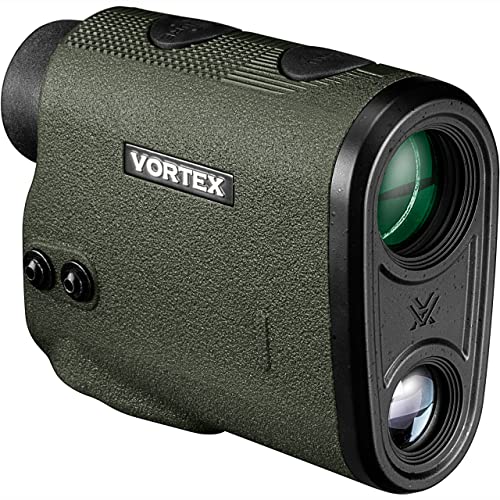
Vortex Diamondback HD 2000 Laser Rangefinder
$299.00Two thousand yards on a reflective target, and far more importantly a faster and more confident read on a soft target like an animal at four hundred.
Best for: reliable reads on soft targets rather than a headline number
Check price on Amazon
Vortex Crossfire HD 1400 Laser Rangefinder
$196.88The entry point with angle compensation built in, which is the feature that actually matters: an uncompensated range up a steep slope will make you shoot high.
Best for: a first rangefinder for hunting distances
Check price on Amazon
Primary Arms SLX 3-18x50mm FFP Gen II Riflescope
$499.99Primary Arms designs its own ACSS reticles, which combine ranging, holdover and wind holds in one reticle sized to a specific cartridge class rather than to a generic grid.
Best for: a shooter who wants to range and hold without dialling
Check price on AmazonCommon targets at common subtensions
Read across from the target you are looking at to the mils you measured.
An 18 inch deer vital zone subtending 1 mil is at 500 yards, at 1.5 mil is at 333 yards, and at 2 mil is at 250 yards.
Sourced figure
| Target | Size | 0.5 mil | 1 mil | 1.5 mil | 2 mil |
|---|---|---|---|---|---|
| 10 inch plate | 10 in | 556 yd | 278 yd | 185 yd | 139 yd |
| 12 inch plate | 12 in | 667 yd | 333 yd | 222 yd | 167 yd |
| Deer vital zone | 18 in | 1000 yd | 500 yd | 333 yd | 250 yd |
| Torso width | 20 in | 1111 yd | 556 yd | 370 yd | 278 yd |
| Full silhouette | 36 in | 2000 yd | 1000 yd | 667 yd | 500 yd |
The constant is 1000 divided by 36, which is 27.78, and it follows directly from the definition of a milliradian. For MOA the constant is 95.49.
Why small reading errors are large range errors
The mils figure sits in the denominator, so the relationship between reading error and range error is not linear. The smaller the subtension you are measuring, the worse it gets.
An 18 inch target at 1.5 mil is 333 yards. Read it as 1.4 mil and you get 357. Read it as 1.6 and you get 313. That 44 yard spread comes from a reading error of a tenth of a mil in either direction, which is about the best most people can do off a reticle on a live animal.
At 3 mil the same tenth of a mil error is worth only about 6 yards. At 0.5 mil it is worth over 100. Reticle ranging is at its worst exactly where you need it most, which is on small or distant targets.
Getting the reading right
- Confirm the rifle is safe. If the rifle is in your hands, keep the muzzle in a safe direction and the action open unless you are actually preparing to shoot.
- Check your focal plane. In a first focal plane scope the reticle subtends correctly at any magnification. In second focal plane it is only correct at ONE magnification, usually the maximum, and using any other setting makes every reading wrong. This is the single most common ranging error.
- Set parallax properly. Parallax error moves the reticle across the target as your head moves, which corrupts the measurement before you start. Adjust until the reticle stays put when you move your eye.
- Measure the dimension you actually know. Use a dimension you are confident about. Back to brisket on a deer is more consistent than overall length, and a known plate size is better than either.
- Read to the finest division you can. Estimate to a tenth of a mil if the reticle supports it, then compute. Take two or three readings and average rather than trusting one.
Sources
- Definition of a milliradian, one thousandth of a radian
- Definition of a minute of angle, one sixtieth of one degree
Frequently asked questions
What is the mil ranging formula?
Range in yards equals the target size in inches multiplied by 27.78, divided by the mils it subtends. The constant is 1000 divided by 36 and comes straight from the definition of a milliradian as one thousandth of the distance to the target. In metric it is simpler still: metres equal target centimetres times 10, divided by mils.
What is the MOA ranging formula?
Range in yards equals the target size in inches multiplied by 95.49, divided by the MOA it subtends. The constant is 100 divided by 1.047, the true inches per MOA at 100 yards. Many shooters use 95.5 as a working figure, which is close enough given that the reading error dominates anyway.
Does reticle ranging work in a second focal plane scope?
Only at the magnification the reticle was calibrated for, which is usually maximum power and is stated in the manual. At any other setting every subtension is wrong in proportion. This is the most common ranging mistake, and it is why first focal plane scopes exist for shooters who range through the glass.
How accurate is reticle ranging?
Accurate enough to be useful and not accurate enough to replace a laser. A tenth of a mil of reading error on a target subtending 1.5 mil moves the answer by more than 20 yards either way, and you are also estimating the target size. Treat it as a check on a laser reading or a fallback when the laser returns nothing.
What target dimension should I use?
The one you are most confident about. A known steel plate size is ideal. On game, back to brisket is more consistent between animals than overall length or height including legs. Whatever you choose, use the same dimension every time so your estimates improve with practice rather than varying randomly.
Why does my reticle ranging answer differ from my rangefinder?
Almost always the target size estimate or the focal plane. Check that your scope is at the calibrated magnification if it is second focal plane, then check your assumed target dimension. The laser is measuring, and you are estimating two quantities, so trust the laser and use the discrepancy to calibrate your own size estimates.
Researched, not professional advice. This page is compiled from published manufacturer specifications, published optical and ballistic formulas, and owner-review consensus, not hands-on testing. Figures described as a rule of thumb are shooter convention rather than sourced numbers, and they are labelled that way wherever they appear. Ballistic figures come from a point mass model using the ballistic coefficient the maker publishes, so treat them as a starting point and confirm them on paper at a measured distance. Confirm your firearm is unloaded with the action open before you mount, level, torque or bore sight anything. Verify a zero only on a supervised range or a safe, legal backstop, know what lies beyond your target, and follow the law where you hunt and shoot, including rules on land access and permitted cartridges.