Scope Mounts
Best One-Piece and Cantilever Scope Mounts
Quick answer
The best one-piece scope mount for most flat top receivers is the Burris P.E.P.R. Scope Mount, 30mm, with Smooth and Picatinny Ring Tops at $61.19, machining the base and ring tops into a single block. That removes an entire alignment tolerance a separate base and ring pair would otherwise stack, which matters most on the exact receivers that need a cantilever offset anyway.
A one-piece scope mount combines the base and the ring tops into a single machined part. The main argument for it has nothing to do with looks: it removes an entire manufacturing tolerance from the stack between the receiver and the scope tube.
A base and a pair of separate rings are three machined parts bolted together, each with its own tolerance, and the two ring bores rarely end up pointing at exactly the same place. A one-piece mount is machined once, as a single unit, so there is no base-to-ring alignment to go wrong in the first place.
This matters most on a flat top receiver, where the scope typically needs to sit forward of a conventional position for correct eye relief anyway, which is a cantilever offset by definition. Everything here is researched from published manufacturer specifications and owner-review consensus rather than testing performed in person.
On this page
Best budget one-piece mounts
A first one-piece mount does not need to be expensive to remove the alignment problem a stamped base and ring stack up. These clear a modern sporting rifle or a bolt action for a fraction of what a precision option costs.

UTG ACCU-SYNC QR 30mm High Profile 50mm Offset Scope Mount
$44.98A high profile mount with a built-in 50mm offset, published to reach correct eye relief on a flat top receiver without adding a separate cantilever ring.
Best for: A budget optic on a flat top modern sporting rifle
Check price on Amazon
Vortex Sport Cantilever 30mm Mount, 2 inch Offset
$96.01 Full specificationsA published 2 inch forward offset in a single machined piece, which is the amount most LPVOs need to reach a comfortable eye box.
Best for: An LPVO that needs to sit well forward on the rail
Check price on Amazon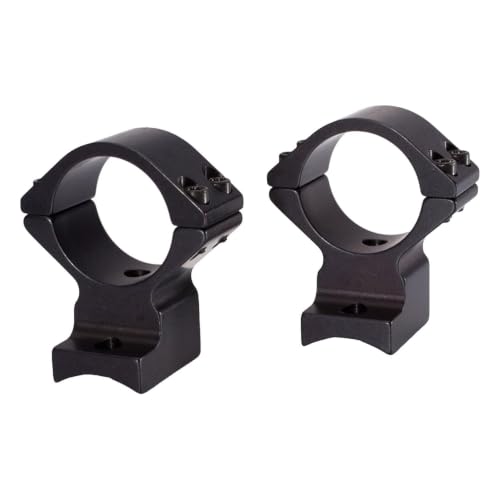
Talley Weatherby Vanguard Scope Mount, 1 inch Medium
$42.96A one-piece design built for one receiver pattern, which removes any question of base-to-receiver fit at a low price.
Best for: A Weatherby Vanguard pattern bolt action on a 1 inch tube
Check price on AmazonBest buy-once one-piece mounts
At this tier a one-piece mount typically adds a Picatinny top for accessories, a rifle-specific fit that removes any base-to-receiver question, or both.

Burris P.E.P.R. Scope Mount, 30mm, with Smooth and Picatinny Ring Tops
$61.19Smooth and Picatinny ring tops on the same machined base, which covers a plain tube or an accessory-heavy build without buying two different mounts.
Best for: A modern sporting rifle build that might add accessories later
Check price on Amazon
Talley Scope Mount for Remington 700 Pattern Actions, 30mm Medium
$47.51Machined for one receiver pattern rather than a generic rail, which removes the base-to-receiver fit question entirely.
Best for: A Remington 700 pattern bolt action
Check price on Amazon
Leupold Mark Scope Mount
$86.99A published integral design from a maker with a long history in scope mounting hardware, for builders who want one part rather than a base and ring pair.
Best for: A bolt action builder who prefers a single trusted part number
Check price on AmazonBest precision one-piece mounts
Precision one-piece mounts add a machined-in cant for distance work or a return-to-zero quick detach mechanism, solving a second problem at the same time as alignment.

Arken Optics 30mm 20 MOA Rigid Precision Scope Mount
$69.99A rigid one-piece body with 20 MOA of cant machined in, combining alignment and elevation reserve in a single part rather than two.
Best for: A precision build that will be dialled well past 500 yards
Check price on Amazon
Talley TMS30M 30mm Modern Sporting Scope Ring, 0.99 inch Height
$66.16A modern one-piece ring design published to 0.99 inches of height, fit to a specific action pattern rather than a generic rail.
Best for: A precision-oriented bolt action where fit matters as much as elevation reserve
Check price on Amazon
ATN Quick Detach Mount for 30mm Scope Tube
$84.99A quick detach one-piece body for a rifle that alternates optics or needs the scope off for transport without losing zero.
Best for: A rifle that switches between a magnified optic and a red dot
Check price on AmazonWho should not buy this tier: Skip a machined one-piece mount with a built-in cant if your rifle already wears a base and rings that are correctly aligned, torqued and holding zero. Swapping the whole mount is not free, and the entire benefit here, guaranteed alignment from a single block, is already present in a setup that already tracks straight.
One-piece mount or two-piece rings: which does your rifle actually need?
The honest version of this decision depends almost entirely on the receiver, not on a general preference for either approach.
A one-piece mount removes an entire alignment tolerance by machining the ring tops and the base as a single block, which matters most on a flat top receiver where a cantilever offset is needed regardless.
Shooter convention
| Situation | One-piece mount | Two-piece rings and base |
|---|---|---|
| Flat top receiver, forward eye relief needed | Cantilever offset built into the mount, ring alignment set at the factory | Needs a separate cantilever ring or extended base to reach the same eye relief |
| Bolt action, conventional receiver | Works, but rarely necessary | The standard approach, with the widest base and ring selection |
| Alignment risk | One machined block removes base-to-ring alignment error entirely | Base and rings are two more machined tolerances to stack, which is why lapping exists |
| Removing and remounting | Some designs are quick detach and return to zero; most are not | A dedicated quick-detach base and ring combination is required either way |
Neither approach is universally correct. A bolt action rifle with generous ring selection and a well-torqued mount does not need a one-piece part to hold zero.
Does a one-piece mount fix cant?
No, and this is a common misunderstanding worth correcting directly. A one-piece mount removes base-to-ring alignment error, which is a separate problem from cant. Cant is whether the reticle itself is square to gravity when you shoulder the rifle, and it is set during the mounting process with a level, not by the mount's own construction. A perfectly machined one-piece mount installed with the reticle two degrees off level is still canted two degrees.
What a one-piece mount does prevent is a bent tube from misaligned ring bores, which preloads the erector and can make elevation track differently up than down. That is a real and separate failure mode from cant, and both need to be checked independently during mounting. See the scope levelling guide for the cant half of the job.
How we chose
We did not test these optics in person and we never claim to. Picks are researched from manufacturer specification sheets, published optical and ballistic formulas, and the recurring themes in verified owner reviews. Every pick is matched to a real objective diameter, a real tube size, a real ring height or a real exit pupil rather than to a price bracket, and it is placed in the tier where its capability actually belongs. Where a figure is shooter convention rather than a sourced number we label it, and where a manufacturer does not publish a figure we leave it out instead of estimating it.
Sources
- Burris, Talley, Leupold and Arken published mount specifications from the product listings in our catalog
- Owner-review consensus on ring-induced erector preload and one-piece mount fitment
Frequently asked questions
What is the advantage of a one-piece scope mount?
It removes an entire alignment tolerance. A base and a pair of separate rings are three machined parts bolted together, each with its own manufacturing tolerance, and the two ring bores rarely point at exactly the same place. A one-piece mount is machined as a single unit, so there is no base-to-ring alignment to go wrong before the scope even goes in.
Do I need a one-piece mount on a bolt action rifle?
Usually not. A conventional bolt action receiver has the widest selection of bases and rings, and a properly torqued and lapped two-piece setup holds zero just as well. One-piece mounts earn their keep most clearly on flat top receivers, where a cantilever offset is needed anyway for correct eye relief.
Does a one-piece mount fix a canted reticle?
No. Cant is whether the reticle is square to gravity when you shoulder the rifle, and it is set during mounting with a level, independent of how the mount itself was manufactured. A one-piece mount prevents ring misalignment, which is a different problem, and both need to be checked separately during the same mounting session.
Is a cantilever mount the same thing as a one-piece mount?
A cantilever mount is usually also a one-piece mount, but the term specifically describes the forward offset built into the design, typically used to move a scope ahead on a flat top receiver for correct eye relief. Not every one-piece mount offsets forward; some sit in a neutral or rearward position depending on the receiver they are built for.
Are one-piece mounts heavier than rings and a base?
Slightly, in most published weights, because there is more material in a single machined block than in two separate rings with a lighter base between them. The difference is a small fraction of the rifle's total weight and is rarely the deciding factor compared to alignment, eye relief and whether the mount fits the receiver correctly.
Do one-piece mounts still need lapping?
Less often than separate rings, because the ring bores are machined together as one part rather than bolted together afterward. A precision one-piece mount can still benefit from lapping if the published tolerance is not tight enough for the build, but it starts from a better position than a base and rings assembled from two different manufacturers.
Researched, not professional advice. This page is compiled from published manufacturer specifications, published optical and ballistic formulas, and owner-review consensus, not hands-on testing. Figures described as a rule of thumb are shooter convention rather than sourced numbers, and they are labelled that way wherever they appear. Ballistic figures come from a point mass model using the ballistic coefficient the maker publishes, so treat them as a starting point and confirm them on paper at a measured distance. Confirm your firearm is unloaded with the action open before you mount, level, torque or bore sight anything. Verify a zero only on a supervised range or a safe, legal backstop, know what lies beyond your target, and follow the law where you hunt and shoot, including rules on land access and permitted cartridges.